This ferret died 33 years ago and scientists bought it back to life
Our ability to clone and de-extinct complex organisms and animals is getting better - and one day humans will be next.

Key takeaways
- After the original ferret, Willa, died in 1988, scientists froze her body to preserve her genetic material, hoping to someday perform an experiment like this.
- First, scientists thought the ferret was extinct, after frustrated ranchers poisoned almost all of the animals in the wild.
- Having Willa’s genetic material back in the mix could make the black-footed ferret more genetically robust and prepared to survive in the wild.
Cite or link to this article
Griffin, M. (2021) 'This ferret died 33 years ago and scientists bought it back to life', 311 Institute, 23 April. Available at: https://www.311institute.com/this-ferret-dies-33-years-ago-and-scientists-bought-it-back-to-life/ (Accessed: 1 October 2026).
Like most of us you probably have dead relatives, and are aware that our time on this mortal coil is short lived – especially when measured against the epoch of time. But, increasingly death no longer has to be permanent and there are an increasingly number of novel ways to resurrect people – whether it’s as avatars, bots, or Virtual Reality (VR) clones, or even by recompiling ancient DNA and using it to bring people back from the dead in physical form by cloning them.
Now, a year or so on after scientists in Japan revived 28,000 year old woolly mammoth cells, we are getting closer to making the latter a reality after scientists cloned an endangered species, a black-footed ferret named Elizabeth Ann, whose donor had been dead for more than 30 years – it might not be Jurassic Park, but for Elizabeth Ann it’s the next best thing.
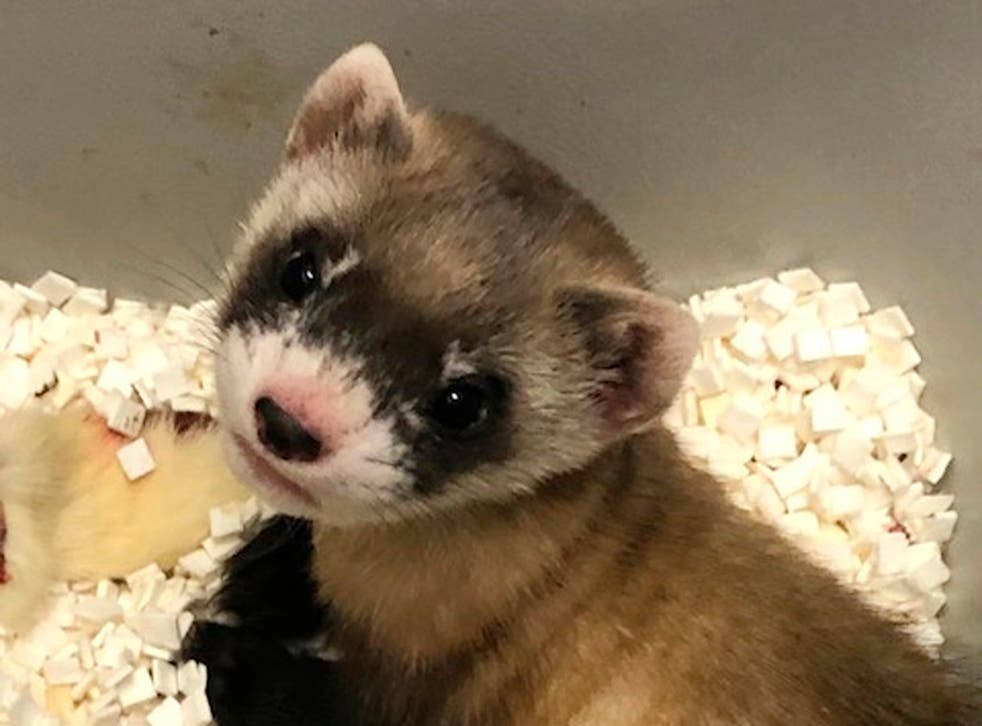
Meet Elizabeth Ann, reincarnated ...
After the original ferret, Willa, died in 1988, scientists froze her body to preserve her genetic material, hoping to someday perform an experiment like this. While a domesticated ferret carried the cloned embryo, the new ferret, who is being raised at a US Fish and Wildlife Service black-footed ferret breeding facility in Fort Collins, Colorado, is still very wild, with all the instincts and aggression that suggests.
Asides from the oddity of the story this is a fresh success story for the black-footed ferret, which has become emblematic of how well conservation and repopulation efforts can work. First, scientists thought the ferret was extinct, after frustrated ranchers poisoned almost all of the animals in the wild. Then, the population grew from a group of just a few, so there are about 1,000 wild black ferrets today -plus populations in wildlife preserves, zoos, and other supervised programs.
Willa was a special animal even before she died. Because of the way black-footed ferrets came back from believed extinction, each animal was precious to the genetic diversity - and with it, the robustness and trait vigor - of the entire new population. So freezing Willa was a way to preserve an important genetic specimen in order for future scientists to find a way to bring those genes back to the group.
“When Willa died, the Wyoming Game and Fish Department sent her tissues to a ‘frozen zoo’ run by San Diego Zoo that maintains cells from more than 1,100 species and subspecies worldwide,” the Associated Press’s Mead Gruver reports.
For now, cloning Willa is a huge help, but that’s not the end of the plans for frozen animals like her.
“Eventually scientists may be able to modify those genes to help cloned animals survive,” Gruver writes.
Willa’s genes were fertilized into an embryo and then carried by a “regular” domestic ferret, who gave birth to Elizabeth Ann. A fellow black-footed ferret didn’t carry the embryo because of the regular risks associated with pregnancy. With the success of this procedure, animal conservators feel more confident about bringing back other specimens, including those that will require genetic debugging, patching, or modification in order to even be successfully cloned.
If this conjures memories of Jurassic Park, you’re not alone. Fears of unintended consequences are valid, but animals like passenger pigeons and the Dodo went extinct because of human irresponsibility, not some specific feature of their ecosystems or climates. Scientists say the benefits of raising the dead outweigh the drawbacks, even if only so that other researchers can study a passenger pigeon in real life instead of textbooks.
Mammals are easier to clone than birds, the scientists say, because birds lay eggs that add complexity to the cloning process. Having Willa’s genetic material back in the mix could make the black-footed ferret more genetically robust and prepared to survive in the wild. For some future cloned passenger pigeon, we might use domestic pigeon genes to make them more robust.
FAQ
Why does this matter?
Our ability to clone and de-extinct complex organisms and animals is getting better - and one day humans will be next.

About the author
Matthew Griffin Founder, 311 Institute
Matthew Griffin is a multi-award winning Futurist and expert in Disruption and Innovation, Geopolitics, Leadership, and Technology, who NASA have described as a "walking encyclopaedia of the future" and a "futurist Polymath."
Read full bio
Matthew Griffin is a multi-award winning Futurist and expert in Disruption and Innovation, Geopolitics, Leadership, and Technology, who NASA have described as a "walking encyclopaedia of the future" and a "futurist Polymath." 15-time best selling author of the "Codex of the Future" series, Matthew is the Founder and Futurist in Chief of the 311 Institute, a global Futures and Deep Futures advisory firm working with royal households, world leaders, G7, G20, and G77 governments, NGOs, and multi-national mid and mega cap firms to help them explore, shape, and lead the next 50 years of business and society.
An award-winning YouTube creator with over a million followers, with an unrivalled global reach and impact, Matthew is a highly sought-after international keynote speaker, lecturer, and mentor who collaborates with global leaders through the United Nations Alliance of Civilizations (UNAOC) and United Nations General Assembly (UNGA) to shape pivotal initiatives such as the UN’s AI for Humanity program, the United Nations Conference of the Parties (UN COP), and the World Economic Forum in Davos.
As the former Global Head of Cloud, National Security, and Enterprise Sales for companies including Atos, Dell-EMC, and IBM, Matthew has a proven track record of building multi-billion dollar business units and turning failing divisions into market leaders. His ability to identify, analyse, and communicate the implications of hundreds of emerging technologies and trends is unparalleled, and his insights are trusted by many of the world’s most respected organisations, including ABB, Accenture, Adidas, AON, ARM, BCG, Centrica, Citi, Coca-Cola, Dentons, Deloitte, Dow Jones, EY, Google, KPMG, Lego, Legal & General, LinkedIn, Microsoft, PepsiCo, Qualcomm, RWE, Samsung, Siemens AG and Siemens Energy, T-Mobile, UBS, VISA, Walmart, Workday, Worldpay and many others.
Regularly featured in the global media including the AP, BBC, Bloomberg, CNBC, Discovery, Forbes, Khaleej Times, Telegraph, TIME, ViacomCBS, WIRED, and the WSJ, Matthews mission is to help organisations create a fair and sustainable future whose benefits are shared by everyone irrespective of their ability, background, or circumstances.
What future do you need to see?
Choose one to get started on biotech and enhanced humans and the future of your organisation.
Sources and further reading
- scientists cloned an endangered species apnews.com
- US Fish and Wildlife Service fws.gov
- San Diego Zoo zoo.sandiegozoo.org
- reports usatoday.com
Source: first published by the 311 Institute on 23 April 2021. Cite as: Griffin, M. (2021). This ferret died 33 years ago and scientists bought it back to life. 311 Institute. https://www.311institute.com/this-ferret-dies-33-years-ago-and-scientists-bought-it-back-to-life/
You are welcome to quote this article with credit and a link to the original.