This Mach 5 jet from Hermeus could be the first to have a 3D printed body
3D printing is a revolutionary manufacturing technology, and it is already transforming everything from materials, food, and human organ transplants, to everyday items.

Key takeaways
- The advantage of 3D printing a hypersonic jet's body is that the material used to print the body itself can be carefully designed and crafted to withstand temperatures that can exceed those found on the surface of the Sun.
- To do so the company has obtained a bunch of Sapphire and large format Sapphire XC printers, an end-to-end metal additive manufacturing solution with which they intend to print the Mach 5 Chimera and Quarterhorse planes.
- Hermeus is also collaborating with government organizations to create the first line of autonomous aircraft that derisk the technology and address pressing national security issues on its way to hypersonic passenger aircraft.
Cite or link to this article
Griffin, M. (2022) 'This Mach 5 jet from Hermeus could be the first to have a 3D printed body', 311 Institute, 10 September. Available at: https://www.311institute.com/this-mach-5-jet-from-hermeus-could-be-the-first-to-have-a-3d-printed-body/ (Accessed: 1 October 2026).
Hermeus, who previously worked with NASA and the US Air Force to develop the first ever hypersonic presidential jet, has announced that it’s been working with Velo3D to 3D print hypersonic jet components and wants to ramp up the technology so it can eventually use it to 3D print an entire aircraft airframe, which would be a world first. The advantage of 3D printing a hypersonic jet's body is that the material used to print the body itself can be carefully designed and crafted to withstand temperatures that can exceed those found on the surface of the Sun.
To do so the company has obtained a bunch of Sapphire and large format Sapphire XC printers, an end-to-end metal additive manufacturing solution with which they intend to print the Mach 5 Chimera and Quarterhorse planes.
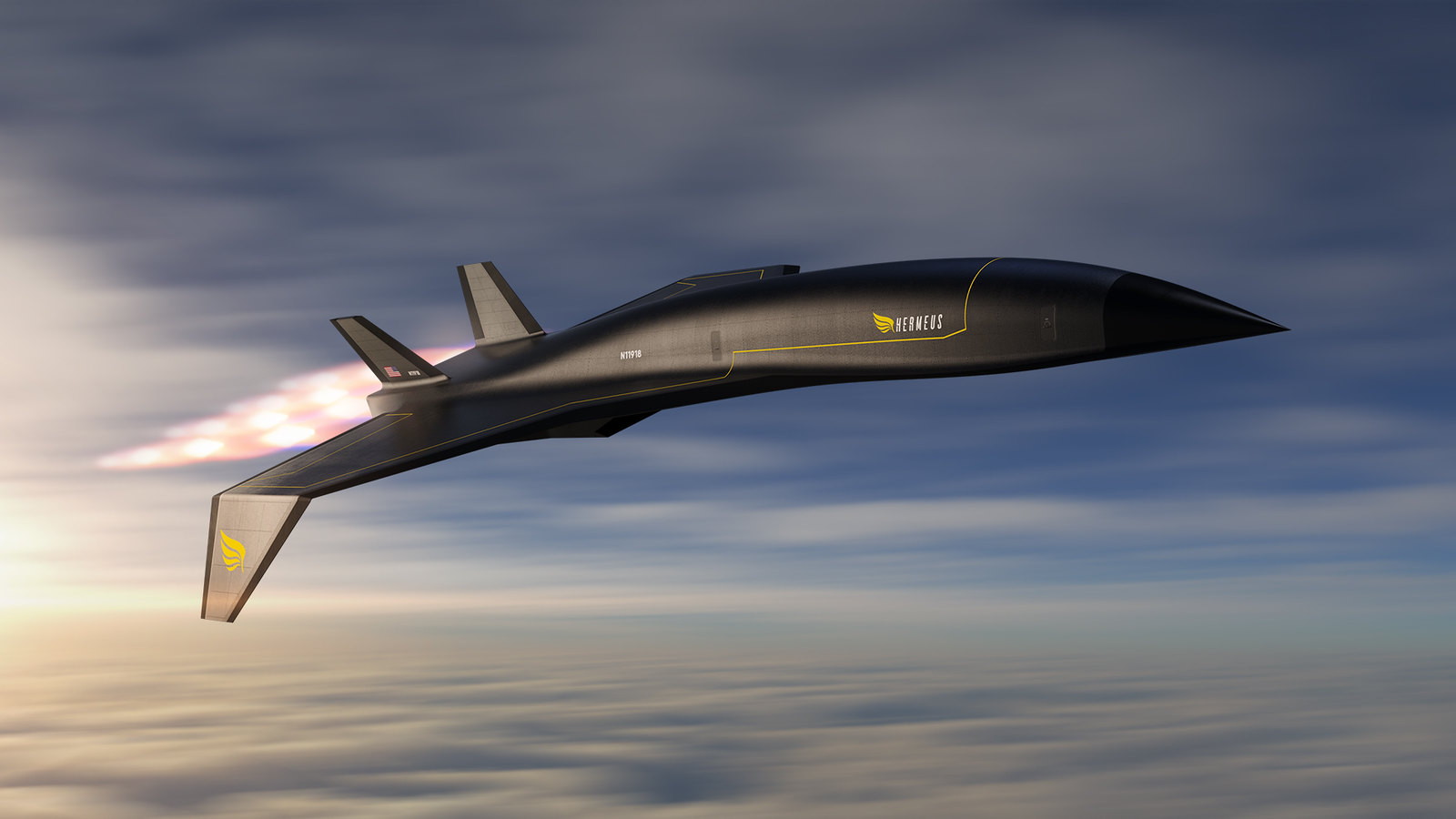
The new hypersonic jet . Courtesy: Hermeus
In time the company also wants to make its hypersonic aircraft, which travel at Mach 5 or roughly 3,800 mph, commercially available for flights and airports, so it’s handy that these 3D printers are made for high volume manufacturing.
“Metal additive manufacturing is a core component of our plan to vertically integrate production,” said Glenn Case, CTO at Hermeus. “As we explore the capabilities of Velo3D’s additive manufacturing technology, we’ll be looking for ways to increase performance, consolidate components, reduce the weight of our aircraft, and minimize external dependencies,” Case also added.
Stating that hypersonic aircraft can be quite challenging for the aviation industry, Velo3D CEO and founder Benny Buller stated that even if the speed, temperature, and vibration that Hermeus will reach are different from regular aircraft, Sapphire and Sapphire XC printers will not let Hermeus down.
“There are not many teams with the deep experience in hypersonics, aviation, and space flight that Hermeus has, and we’re truly honored to provide Sapphire printers to help them achieve their goals. I have no doubt that they will bring their vision to life and make the hypersonic commercial flight a reality.”
Velo3D is essentially a metal 3D printing technology company, and the company's solution enables customers in space exploration, aviation, power generation, energy, and semiconductors to innovate the future in their respective industries by unlocking a wide range of “design freedom.”
The Sapphire printers use a specialized protrusion tolerant non-contact re-coater that almost completely eliminates the risk of part collisions, dramatically increasing yields, and enables a printing process that allows lower angles and overhangs down to zero degrees, thin leak tight walls, large diameter, and extremely small inner tubes, with little to no supports.
Hermeus was founded in 2018 with the ambition of dramatically accelerating air travel and have been building and testing their aircraft ever since, and when commercialised we could finally see passengers cross the Atlantic in 90 minutes, more than twice as fast as the Concorde.
Hermeus is also collaborating with government organizations to create the first line of autonomous aircraft that derisk the technology and address pressing national security issues on its way to hypersonic passenger aircraft.
What this means for your organisation
Printing is moving into airframes.
Hermeus has moved from printing jet components to wanting a full printed airframe, which would be a world first. In our data, 3D printing is at TRL 9, with wide use expected by 2036. Teams that still treat it as a prototype tool should revisit that view.
Material design becomes the edge.
Printing lets a maker design the body material to withstand temperatures that can exceed those on the surface of the Sun. Hermeus says it will look to increase performance, consolidate components and reduce weight. Our data puts wide use of 3D printed materials at 2040.
Control of supply is the real prize.
Hermeus calls metal additive manufacturing a core part of its plan to vertically integrate production and minimise external dependencies. It is also working with government bodies on autonomous aircraft that reduce risk on the way to hypersonic passenger flight. Our data puts wide use of autonomous aircraft at 2045, so the timeline is long.
Three questions for your next leadership meeting
- Which of our parts could be printed to cut weight or part count?
- How much of our production could we bring in-house, as Hermeus plans?
- Can our materials and suppliers cope with extreme heat and vibration?
The trends and technologies behind this story
From the 311 Starburst, the 311 Strategic Intelligence Unit’s map of the technologies and trends shaping the next 50 years.
Analysis by the 311 Strategic Intelligence Unit, from Matthew Griffin’s article and 311 data. First published on Fanatical Futurist.
FAQ
Why does this matter?
3D printing is a revolutionary manufacturing technology, and it is already transforming everything from materials, food, and human organ transplants, to everyday items.

About the author
Matthew Griffin Founder, President and Futurist, 311 Institute
Matthew Griffin is a multi-award winning Futurist and expert in Disruption and Innovation, Geopolitics, Leadership, and Technology, who NASA have described as a "walking encyclopaedia of the future" and a "futurist Polymath."
Read full bio
Matthew Griffin is a multi-award winning Futurist and expert in Disruption and Innovation, Geopolitics, Leadership, and Technology, who NASA have described as a "walking encyclopaedia of the future" and a "futurist Polymath." 17-time best selling author of the "Codex of the Future" series, Matthew is the Founder, President and Futurist of the 311 Institute, a global Futures and Deep Futures advisory firm working with royal households, world leaders, G7, G20, and G77 governments, NGOs, and multi-national mid and mega cap firms to help them explore, shape, and lead the next 50 years of business and society.
An award-winning YouTube creator with over a million followers, with an unrivalled global reach and impact, Matthew is a highly sought-after international keynote speaker, lecturer, and mentor who collaborates with global leaders through the United Nations Alliance of Civilizations (UNAOC) and United Nations General Assembly (UNGA) to shape pivotal initiatives such as the UN’s AI for Humanity programme, the United Nations Conference of the Parties (UN COP), and the World Economic Forum in Davos.
As the former Global Head of Cloud, National Security, and Enterprise Sales for companies including Atos, Dell-EMC, and IBM, Matthew has a proven track record of building multi-billion dollar business units and turning failing divisions into market leaders. His ability to identify, analyse, and communicate the implications of hundreds of emerging technologies and trends is unparalleled, and his insights are trusted by many of the world’s most respected organisations, including ABB, Accenture, Adidas, AON, ARM, BCG, Centrica, Citi, Coca-Cola, Dentons, Deloitte, Dow Jones, EY, Google, KPMG, Lego, Legal & General, LinkedIn, Microsoft, PepsiCo, Qualcomm, RWE, Samsung, Siemens AG and Siemens Energy, T-Mobile, UBS, VISA, Walmart, Workday, Worldpay and many others.
Regularly featured in the global media including the AP, BBC, Bloomberg, CNBC, Discovery, Forbes, Khaleej Times, Telegraph, TIME, ViacomCBS, WIRED, and the WSJ, Matthews mission is to help organisations create a fair and sustainable future whose benefits are shared by everyone irrespective of their ability, background, or circumstances.
What future do you need to see?
Choose one to get started on industry and manufacturing and the future of your organisation.
Sources and further reading
- Velo3D velo3d.com
Source: first published by the 311 Institute on 10 September 2022. Cite as: Griffin, M. (2022). This Mach 5 jet from Hermeus could be the first to have a 3D printed body. 311 Institute. https://www.311institute.com/this-mach-5-jet-from-hermeus-could-be-the-first-to-have-a-3d-printed-body/
You are welcome to quote this article with credit and a link to the original.