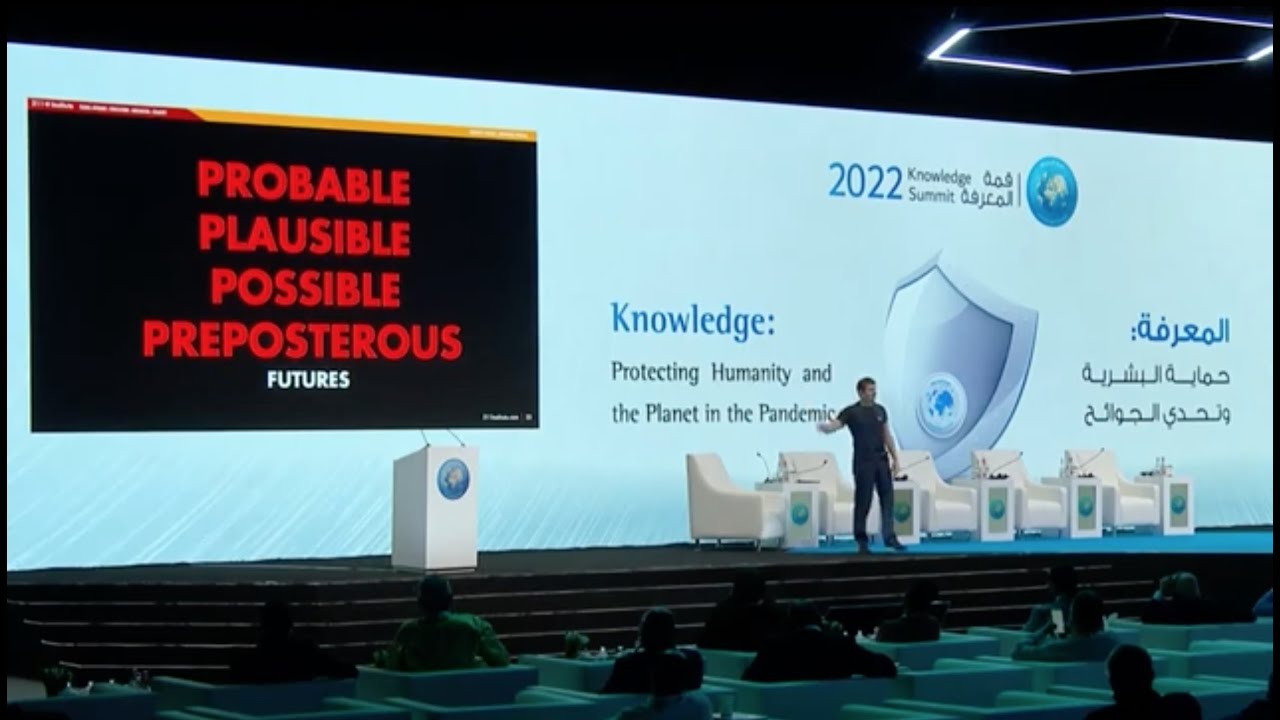
Invited by Muna to speak at the MBRF Knowledge Summit in the Dubai Expo 2020 main arena, on behalf of the United Nations Development Programme and the Mohammed Bin Rashid Al Maktoum Knowledge Foundation.
Matthew GriffinFounder, President and Futurist, 311 Institute
G7 · G20governments advised
850+keynotes
102countries
17codexes
Future of work sessions forPepsiCoWinchester CollegeUniversity of GreenwichDiscoverASM TechnologiesGovernment of Bahrain
Featured inBloombergThe Wall Street JournalThe Telegraph
Muna invited Matthew to present at the MBRF Knowledge Summit, held in the main arena at Dubai Expo 2020 on behalf of the United Nations Development Programme (UNDP) and the Mohammed Bin Rashid Al Maktoum Knowledge Foundation (MBRF). The summit brought leading figures together in front of international dignitaries to discuss the latest ideas in the knowledge economy, and how they can help solve some of the world's most pressing challenges.
Matthew's keynote looked at the future of knowledge itself: what we learn, how we learn it, and how technology is helping us learn in new ways. He ranged from neurotech that could upload knowledge to our minds, Matrix style, to AIs that create their own knowledge without human input, knowledge that in many respects differs from our own, and from our own "wisdom".
"AIs that, without human input, create their own knowledge, which in many respects differs from our own knowledge and wisdom."Matthew Griffin, Dubai, September 2022
The organisers also asked him to cover two further subjects: how to think like a futurist, and how to spot and, for want of a better word, solve the next pandemic.
On pandemics, he walked through the new sensors and detection systems that can spot the early emergence of the next outbreak, and the new technologies that will help counter it. It was a lot of ground for around forty minutes, and by the end of the session he had shifted many people's view of the world.
311 Intelligence
What this means for your leadership team
Knowledge is no longer only human.
The keynote pointed to neurotech that could upload knowledge and to systems that create their own knowledge without human input. That knowledge can differ from our own knowledge and wisdom. Leaders need a clear view of who checks it before it informs decisions, and how teams learn alongside it, as adaptive learning tools tailor lessons to each learner.
Detection comes before response.
The session showed sensors and detection systems that can spot an outbreak early. Bio-sensors use living things such as enzymes, antibodies or cells to find a particular substance. Autonomous sensor systems sense changes around them and react on their own, so early signals can reach people sooner.
Preparedness is slipping as risk grows.
Outbreaks become more likely as land use, climate and travel bring people and pathogens together. Meanwhile money and cooperation for preparedness are shrinking. Organisations should not wait for public systems to carry the load, and should build their own detection and response plans.
Three questions for your next leadership meeting
Who in our organisation checks knowledge that machines create without human input?
What early signals would warn us of the next outbreak?
Are we planning for shrinking public support in a health crisis?
The trends and technologies behind this session
From the 311 Starburst, the 311 Strategic Intelligence Unit’s map of the technologies and trends shaping the next 50 years.
It means treating knowledge and health risk as planning issues, not side topics. Knowledge can now come from machines as well as people, and outbreaks can be detected earlier. Organisations that set up checks, sensing and response plans ahead of time will be better placed.
How do epidemics and pandemics relate to this keynote?
The keynote asked how to spot and solve the next pandemic. The trend shows new outbreaks growing more likely as land use, climate and travel bring people and pathogens together. That makes early detection a practical priority.
How do bio-sensors relate to this keynote?
Matthew covered sensors that can spot the early emergence of an outbreak. Bio-sensors use living things such as enzymes, antibodies or cells to find a particular substance, which makes them a natural fit for that task.
How can 311 brief our leadership team on this?
Through a private executive briefing or leadership workshop, tailored to your sector, in person first.
Bring this to your leadership teamA private executive briefing or leadership workshop, tailored to your sector. In person first, anywhere in the world.
Analysis by the 311 Strategic Intelligence Unit, from Matthew Griffin’s session and 311 data.
If Matthew gave this session today
Science fiction is becoming science fact for learners.
The Future of Education and Learning codex looks at how we prepare students and workforces for a future where science fiction is science fact. That is the same question this session asked about neurotech and machines that create their own knowledge.