Matthew GriffinFounder, President and Futurist, 311 Institute
G7 · G20governments advised
850+keynotes
102countries
17codexes
Future of work sessions forPepsiCoWinchester CollegeUniversity of GreenwichASM TechnologiesGovernment of BahrainUnleashed
Featured inBloombergThe Wall Street JournalThe Telegraph
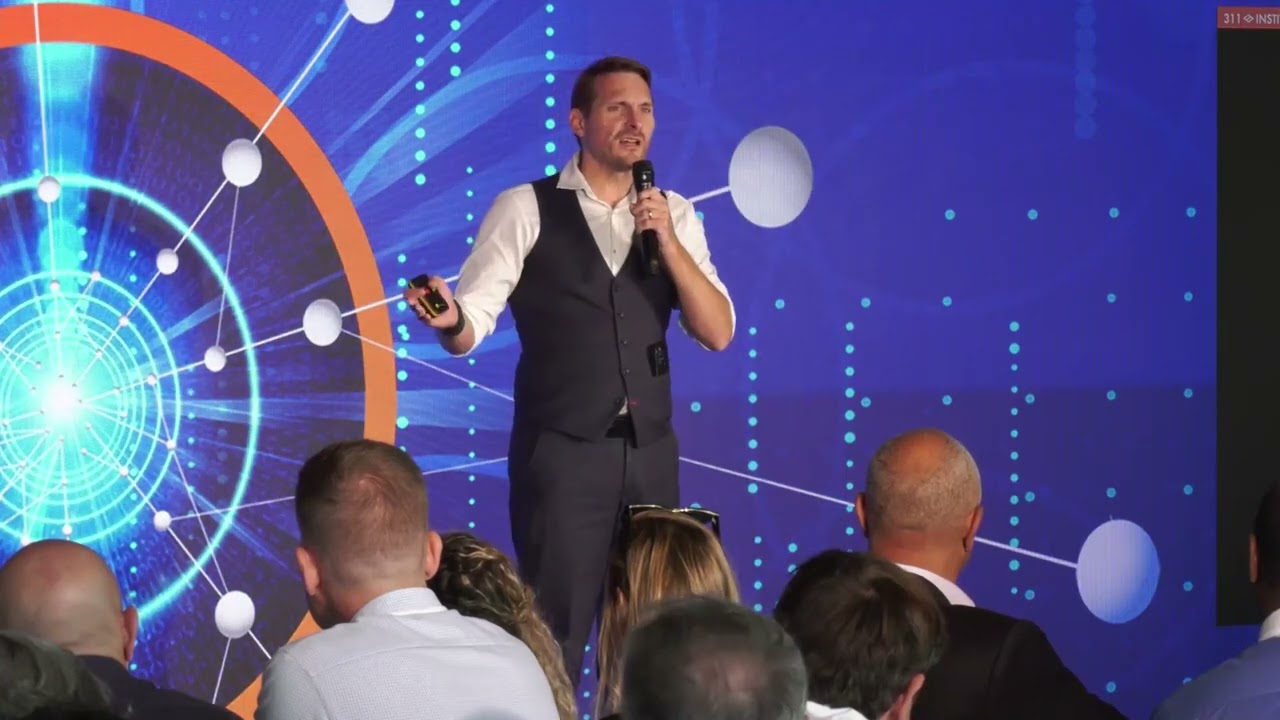
Discover, the company behind the Discover card, invited Matthew to keynote its annual global partner summit in Valencia, Spain, and asked him to present the Future of Work. Its global payments network supports more than 55 million merchants and enables over $500 billion of payments a year.
With more than 57 million card holders, $13 billion in revenues and over 17,000 employees worldwide, Discover is one of the most recognised payment providers in the world. Matthew found an even more telling figure: 87% of its employees rate it a great place to work, and it was easy to see why.
"The trends ahead will change how we work, where we work, and who and what we work with."Matthew Griffin, Valencia, January 2023
He opened with the forces accelerating the world's rate of change, then walked the audience through future company business models and the trends that will change how we work, where we work, and who and what we work with, using examples throughout.
The session ranged from machines as colleagues and co-workers to the democratisation of skills and the rise of tele-operations. Matthew also set out the differences between automated, autonomous and augmented work programmes, and how each can benefit everyone, before the conversation continued in a Q&A off camera.
311 Intelligence
What this means for your leadership team
Change is compressing planning cycles.
Matthew began with the forces that speed up the world's rate of change. Faster technology adoption and shorter corporate lifespans mean long plans age quickly. Leaders should treat workforce planning as something to revisit often, not once a year.
Colleagues now include machines.
The session treated machines as colleagues and co-workers. It also separated automated, autonomous and augmented work programmes. Tele-operations adds another route, where people run machines and vehicles from far away, so the choice of programme shapes the job itself.
Skills and place are loosening.
Skills democratisation lets people do work that once needed years of training, which changes who can do what. Work from anywhere is growing, yet most employers still tie staff to one country. That gap is a talent and policy decision for leadership teams.
Three questions for your next leadership meeting
Which of our roles could be augmented rather than automated?
Who in our business could do new work with simpler tools?
Where do we still tie staff to one country, and why?
The trends and technologies behind this session
From the 311 Starburst, the 311 Strategic Intelligence Unit’s map of the technologies and trends shaping the next 50 years.
What does the Future of Work session mean for organisations?
It means the way work is organised is open to change on three fronts: how people work, where they work, and who and what they work with. Organisations that plan for machines as co-workers and for new skill sources will be better placed than those that wait.
How does the accelerating rate of change relate to the session?
Matthew opened with the forces behind faster change. The trend shows technology adoption speeding up and corporate lifespans shortening, which compresses business planning cycles. Workforce plans need the same shorter rhythm.
How does skills democratisation relate to the session?
The session covered the democratisation of skills. The trend shows digital tools letting people code, design, write and analyse without years of training. This reshapes who can do what, and how teams are built.
How can 311 brief our leadership team on this?
Through a private executive briefing or leadership workshop, tailored to your sector, in person first.
Bring this to your leadership teamA private executive briefing or leadership workshop, tailored to your sector. In person first, anywhere in the world.
Analysis by the 311 Strategic Intelligence Unit, from Matthew Griffin’s session and 311 data.
If Matthew gave this session today
We measured what one person can direct with AI.
311 Institute's research measured what one person can make and direct with AI agents and robots, and found a heavy AI user already directs the work of about 18 people for $180 a month.