Police use DNA to create photofits of criminals
Many crimes go unresolved because there are no witnesses but now a new technique can create photofits from fragments of DNA.

Key takeaways
- A murder has been committed, and all the cops have to go on is a trace of DNA left at the scene.
- By contrast, Claes and Shriver superimposed a mesh of more than 7,000 points onto the scanned 3D images and recorded the precise location of each point.
- Next the researchers tested each of the volunteers for 76 genetic variants in genes that were already known to cause facial abnormalities when mutated.
Cite or link to this article
Griffin, M. (2016) 'Police use DNA to create photofits of criminals', 311 Institute, 26 August. Available at: https://www.311institute.com/police-are-using-dna-to-create-accurate-photofits-of-criminals/ (Accessed: 1 October 2026).
A murder has been committed, and all the cops have to go on is a trace of DNA left at the scene. It doesn’t match any profile in databases of known criminals, and the trail goes cold. But what if the police could issue a wanted poster based on a realistic “photofit” likeness built from that DNA?
Not if, but when, claim researchers who have developed a method for determining how our genes influence facial shape. One day, the technique may even allow us to gaze into the faces of extinct human-like species that interbred with our own ancestors.
It’s already possible to make some inferences about the appearance of crime suspects from their DNA alone, including their racial ancestry and some shades of hair colour. And in 2012, a team led by Manfred Kayser of Erasmus University Medical Center in Rotterdam, the Netherlands, identified five genetic variants with detectable effects on facial shape. It was a start, but still a long way from reliable genetic photofits.
To take the idea a step further, a team led by population geneticist Mark Shriver of Pennsylvania State University and imaging specialist Peter Claes of the Catholic University of Leuven (KUL) in Belgium used a stereoscopic camera to capture 3D images of almost 600 volunteers from populations with mixed European and West African ancestry. Because people from Europe and Africa tend to have differently shaped faces, studying people with mixed ancestry increased the chances of finding genetic variants affecting facial structure.
Kayser’s study had looked for genes that affected the relative positions of nine facial “landmarks”, including the middle of each eyeball and the tip of the nose. By contrast, Claes and Shriver superimposed a mesh of more than 7,000 points onto the scanned 3D images and recorded the precise location of each point. They also developed a statistical model to consider how genes, sex and racial ancestry affect the position of these points and therefore the overall shape of the face.
Next the researchers tested each of the volunteers for 76 genetic variants in genes that were already known to cause facial abnormalities when mutated. They reasoned that normal variation in genes that can cause such problems might have a subtle effect on the shape of the face. After using their model to control for the effects of sex and ancestry, they found 24 variants in 20 different genes that seemed to be useful predictors of facial shape.
Reconstructions based on these variants alone aren’t yet ready for routine use by crime labs, the researchers admit. Still, Shriver is already working with police to see if the method can help find the perpetrator in two cases of serial rape in Pennsylvania, for which police are desperate for new clues.
To get a sense of the method’s current power, Claes and Shriver used the new technique to predict the appearance of a young woman based on a scan of her DNA performed by the Californian company 23andMe and you can judge for yourself how closely their prediction resembles the volunteer.
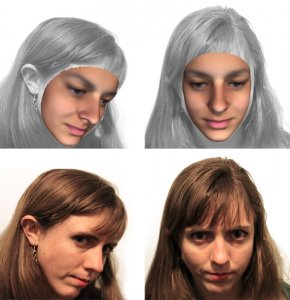
Fig 1. The DNA based photofit looks like the volunteer
Narrowing the search
The next step is to run larger studies in different populations to confirm that the variants found so far are statistically reliable because if they are then it's likely that the police are going to be tripping over themselves to use the new technique. The researchers also plan to use the method to discover further genetic variations that influence facial structure.
“I believe that in five to 10 years’ time, we will be able to computationally predict a face,” says Claes.
“In five to 10 years’ time we will be able to predict a person’s face from their DNA profile.”
Even if it becomes possible to produce accurately reconstructed faces, the photofits wouldn’t be used as evidence in a criminal trial. Instead, any person identified via the images would have their DNA compared to the crime scene sample in the usual way. In that sense, the technique is more like psychological profiling, used to narrow the search for a suspect, than conventional forensic DNA testing.
Bruce Budowle of the University of North Texas in Fort Worth, formerly the FBI’s leading expert on forensic DNA analysis, hopes that the method will also lead to better facial reconstructions of people from skeletal remains.
“It’s an easier step, because the skull gives you an anchor,” Budowle says.
“If you have genetic information that could guide the artist, so that they’re not just freewheeling it, that might help us identify the remains.”
Then there is the intriguing possibility of producing facial reconstructions of extinct human relatives. Even for Neanderthals, where there are numerous fossil skulls, palaeoanthropologists have little idea about the soft tissues of the face.
“We don’t know how far out their noses extended,” says Shriver. This means that artists’ impressions of what the species looked like are partly guesswork. Shriver hopes that there will be enough overlap between the Neanderthal and modern human genomes for variants that influence face shape to start filling in such gaps.
“The technique could also allow us to create facial reconstructions of extinct human relatives”
For other ancient hominins, such as the Denisovans – who once occupied a vast expanse of Asia from Siberia to Indonesia – there are so far no confirmed skulls to go from, so reconstruction from DNA is the best hope of putting a face to the species name.
Both the Neanderthals and Denisovans interbred on occasion with our own ancestors, leaving telltale traces of their DNA in some modern human genomes. Indeed, evolutionary geneticists believe that early Homo sapiens hybridised with a variety of extinct hominins, which means that the human genome should be littered with signatures of these ancient cross-species sexual encounters.
Joshua Akey of the University of Washington in Seattle, who is looking for such DNA “fossils”, is excited about the possibility of using these to reconstruct what the extinct hominins may have looked like.
“We’re not quite there yet,” he says. “But this ultimately might be a really profound tool.”
FAQ
Why does this matter?
Many crimes go unresolved because there are no witnesses but now a new technique can create photofits from fragments of DNA.

About the author
Matthew Griffin Founder, 311 Institute
Matthew Griffin is a multi-award winning Futurist and expert in Disruption and Innovation, Geopolitics, Leadership, and Technology, who NASA have described as a "walking encyclopaedia of the future" and a "futurist Polymath."
Read full bio
Matthew Griffin is a multi-award winning Futurist and expert in Disruption and Innovation, Geopolitics, Leadership, and Technology, who NASA have described as a "walking encyclopaedia of the future" and a "futurist Polymath." 15-time best selling author of the "Codex of the Future" series, Matthew is the Founder and Futurist in Chief of the 311 Institute, a global Futures and Deep Futures advisory firm working with royal households, world leaders, G7, G20, and G77 governments, NGOs, and multi-national mid and mega cap firms to help them explore, shape, and lead the next 50 years of business and society.
An award-winning YouTube creator with over a million followers, with an unrivalled global reach and impact, Matthew is a highly sought-after international keynote speaker, lecturer, and mentor who collaborates with global leaders through the United Nations Alliance of Civilizations (UNAOC) and United Nations General Assembly (UNGA) to shape pivotal initiatives such as the UN’s AI for Humanity program, the United Nations Conference of the Parties (UN COP), and the World Economic Forum in Davos.
As the former Global Head of Cloud, National Security, and Enterprise Sales for companies including Atos, Dell-EMC, and IBM, Matthew has a proven track record of building multi-billion dollar business units and turning failing divisions into market leaders. His ability to identify, analyse, and communicate the implications of hundreds of emerging technologies and trends is unparalleled, and his insights are trusted by many of the world’s most respected organisations, including ABB, Accenture, Adidas, AON, ARM, BCG, Centrica, Citi, Coca-Cola, Dentons, Deloitte, Dow Jones, EY, Google, KPMG, Lego, Legal & General, LinkedIn, Microsoft, PepsiCo, Qualcomm, RWE, Samsung, Siemens AG and Siemens Energy, T-Mobile, UBS, VISA, Walmart, Workday, Worldpay and many others.
Regularly featured in the global media including the AP, BBC, Bloomberg, CNBC, Discovery, Forbes, Khaleej Times, Telegraph, TIME, ViacomCBS, WIRED, and the WSJ, Matthews mission is to help organisations create a fair and sustainable future whose benefits are shared by everyone irrespective of their ability, background, or circumstances.
What future do you need to see?
Choose one to get started on security and privacy and the future of your organisation.
Sources and further reading
- Kayser cv erasmusmc.nl
- Mark Shriver profiles.psu.edu
- Peter Claes kuleuven.be
- increased the chances of finding genetic variants en.wikipedia.org
- 23andMe 23andme.com
Source: first published by the 311 Institute on 26 August 2016. Cite as: Griffin, M. (2016). Police use DNA to create photofits of criminals. 311 Institute. https://www.311institute.com/police-are-using-dna-to-create-accurate-photofits-of-criminals/
You are welcome to quote this article with credit and a link to the original.