Scientists unveil self-healing asphalt to end potholes
Many a motorist has been upended by potholes, as their cars clang into one, this might be a way to end them for good.

Key takeaways
- Courtesy: ETH Zurich Bitumen is a sticky, viscous black binder used in road construction, made from petroleum.
- The bitumen is mixed with aggregate particles for the use of road construction, but slowly crumbles down due to wear and tear, differences in temperature and chemical substances.
- The cracks that develop are first microscopic, but eventually grow under the weight of traffic.
Cite or link to this article
Griffin, M. (2019) 'Scientists unveil self-healing asphalt to end potholes', 311 Institute, 27 July. Available at: https://www.311institute.com/scientists-unveil-self-healing-asphalt-to-end-potholes/ (Accessed: 8 October 2026).
WHY TIS MATTERS IN BRIEF
Many a motorist has been upended by potholes, as their cars clang into one, this might be a way to end them for good.
Self-healing materials are in vogue at the moment with breakthroughs across a variety of fields that include being able to use the tech to heal everything from cracked smartphone screens and catastrophically damaged electronics and robots, to healing cracks in concrete. And that’s before we discuss the creation of the world’s first living materials that not only self-heal but also grow.
Cracks in asphalt are a common sight, but a pain to repair. It is expensive and because the roads need to be closed down for construction, traffic jams occur. Now though researchers at ETH Zurich and EMPA in Switzerland are working on a solution by creating pothole proof, self-healing asphalt, which can be mended using just a magnet field.

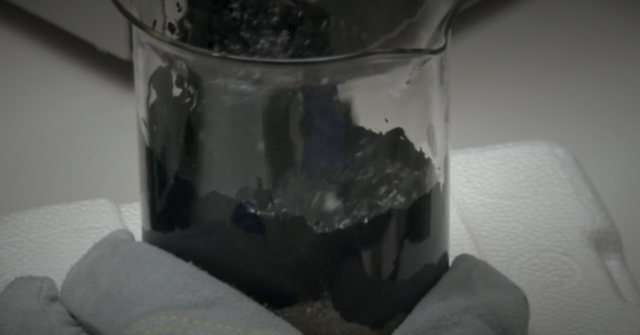
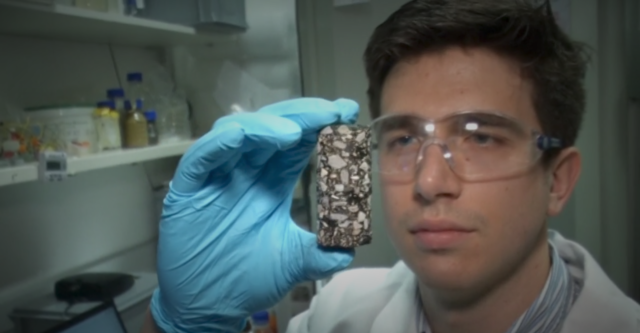
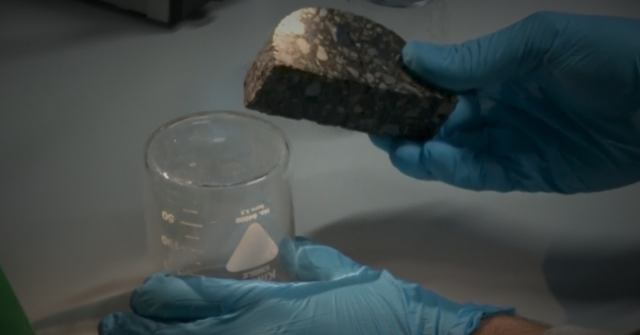
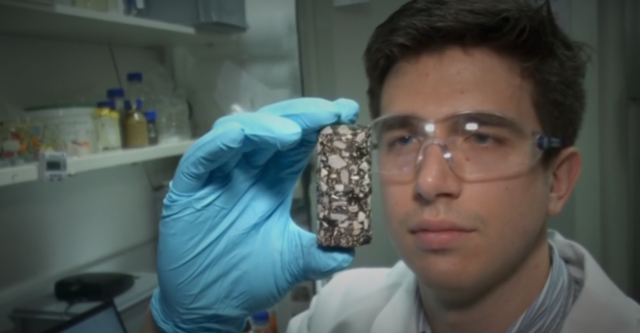

Courtesy: ETH Zurich
Bitumen is a sticky, viscous black binder used in road construction, made from petroleum. The bitumen is mixed with aggregate particles for the use of road construction, but slowly crumbles down due to wear and tear, differences in temperature and chemical substances. The cracks that develop are first microscopic, but eventually grow under the weight of traffic.
To make the self-healing asphalt, the binder is mixed with iron oxide nanoparticles, and when these particles are exposed to a magnetic field, they heat up. This heat is then transferred to the bitumen, softening it and thereby healing the cracks. To be completely self-healing though the roads must be constructed entirely using the nanoparticle mixture, but none the less existing potholes can be mended with the new material too to create an intermediary fix.
A few years ago, there was a similar project, but instead of nanoparticles the team used steel wool fibre. However, the main problem with this was that the fibres took too long to heat up, which would mean that it would take several minutes to fix half a metre of road which would have been impractical in the real world.
The iron oxide nanoparticles used in the current project heat up much quicker, eliminating this problem. In addition, iron oxide particle aren’t harmful to human health because they are strongly bound with the bitumen and it’s unlikely they could escape in the first place.
At the moment, and because of the constant road stress, the team say any road using the new material would have to be treated annually using maintenance vehicles equipped with giant magnetic coils to quickly kick-start the healing process, but as the technology improves they also envisage that treatments would have to be applied less regularly.
So, is this the end for potholes? Well, it’s a start… and anything that helps us drink out Starbucks molecular coffee in peace in our future self-driving cars would be most welcome.
FAQ
Why does this matter?
Many a motorist has been upended by potholes, as their cars clang into one, this might be a way to end them for good.

About the author
Matthew Griffin Founder, 311 Institute
Matthew Griffin is a multi-award winning Futurist and expert in Disruption and Innovation, Geopolitics, Leadership, and Technology, who NASA have described as a "walking encyclopaedia of the future" and a "futurist Polymath."
Read full bio
Matthew Griffin is a multi-award winning Futurist and expert in Disruption and Innovation, Geopolitics, Leadership, and Technology, who NASA have described as a "walking encyclopaedia of the future" and a "futurist Polymath." 15-time best selling author of the "Codex of the Future" series, Matthew is the Founder and Futurist in Chief of the 311 Institute, a global Futures and Deep Futures advisory firm working with royal households, world leaders, G7, G20, and G77 governments, NGOs, and multi-national mid and mega cap firms to help them explore, shape, and lead the next 50 years of business and society.
An award-winning YouTube creator with over a million followers, with an unrivalled global reach and impact, Matthew is a highly sought-after international keynote speaker, lecturer, and mentor who collaborates with global leaders through the United Nations Alliance of Civilizations (UNAOC) and United Nations General Assembly (UNGA) to shape pivotal initiatives such as the UN’s AI for Humanity program, the United Nations Conference of the Parties (UN COP), and the World Economic Forum in Davos.
As the former Global Head of Cloud, National Security, and Enterprise Sales for companies including Atos, Dell-EMC, and IBM, Matthew has a proven track record of building multi-billion dollar business units and turning failing divisions into market leaders. His ability to identify, analyse, and communicate the implications of hundreds of emerging technologies and trends is unparalleled, and his insights are trusted by many of the world’s most respected organisations, including ABB, Accenture, Adidas, AON, ARM, BCG, Centrica, Citi, Coca-Cola, Dentons, Deloitte, Dow Jones, EY, Google, KPMG, Lego, Legal & General, LinkedIn, Microsoft, PepsiCo, Qualcomm, RWE, Samsung, Siemens AG and Siemens Energy, T-Mobile, UBS, VISA, Walmart, Workday, Worldpay and many others.
Regularly featured in the global media including the AP, BBC, Bloomberg, CNBC, Discovery, Forbes, Khaleej Times, Telegraph, TIME, ViacomCBS, WIRED, and the WSJ, Matthews mission is to help organisations create a fair and sustainable future whose benefits are shared by everyone irrespective of their ability, background, or circumstances.
What future do you need to see?
Choose one to get started on industry and manufacturing and the future of your organisation.
Sources and further reading
- EMPA empa.ch
Source: first published by the 311 Institute on 27 July 2019. Cite as: Griffin, M. (2019). Scientists unveil self-healing asphalt to end potholes. 311 Institute. https://www.311institute.com/scientists-unveil-self-healing-asphalt-to-end-potholes/
You are welcome to quote this article with credit and a link to the original.