World first as Japanese rovers relay incredible photos from distant ancient asteroid
In galactic terms Earth's neighbourhood is huge, and we're only just beginning to explore it.

Key takeaways
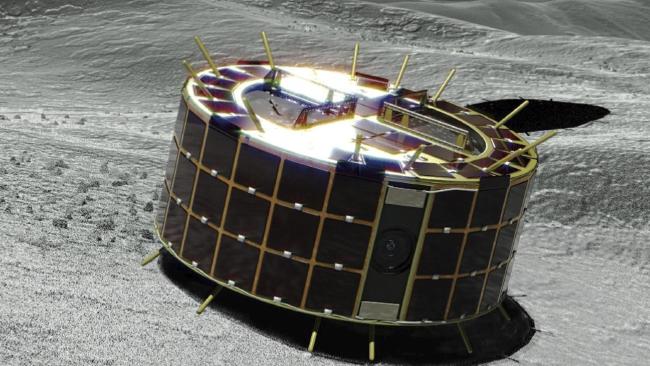
- The 1kg rovers are equipped with wide angle and stereo cameras to send back pictures, and spine like projections from the edges of the hoppers are sensors that will measure surface temperatures on the asteroid.
- Hayabusa-2 would then descend into the crater to collect fresh rocks that have not been altered by eons of exposure to the environment of space which will then be sent back to Earth for analysis.
- The spacecraft will leave Ryugu in December 2019 with the intention of returning to Earth with the asteroid samples in 2020.
Cite or link to this article
Griffin, M. (2018) 'World first as Japanese rovers relay incredible photos from distant ancient asteroid', 311 Institute, 30 September. Available at: https://www.311institute.com/world-first-as-japanese-rovers-relay-incredible-photos-from-distant-ancient-asteroid/ (Accessed: 8 October 2026).
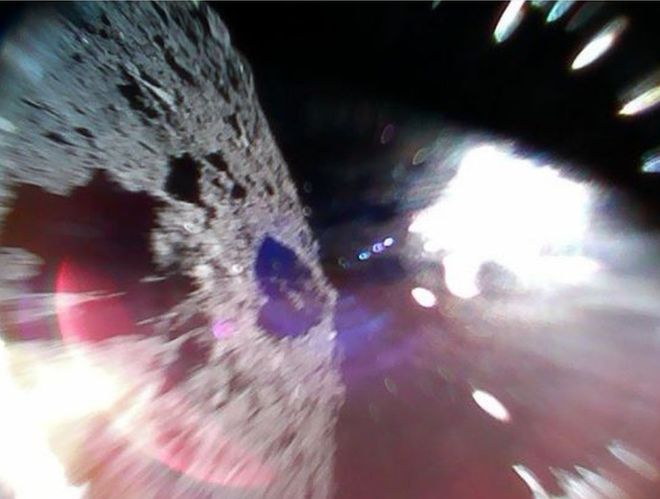
First Japan wants to be the world's first country to drill a hole through the Earth’s mantle, and build the world's first space elevator, and now the Japan Aerospace Exploration Agency, JAXA, has made history by successfully landing two robotic explorers on the surface of an asteroid. The two small rovers, which were despatched from the Hayabusa-2 spacecraft will now move around the 1km wide space rock known as Ryugu, and the asteroid's low gravity means they can hop across it, capturing temperatures and images of its surface as they go.
"Both rovers are in good condition," the agency confirmed on Saturday.
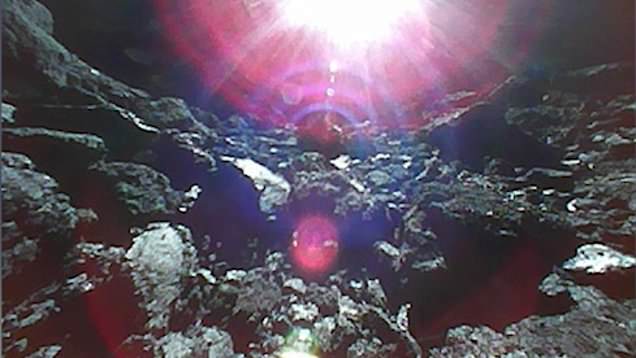
The other day JAXA tweeted pictures from the two rovers, which were transmitted via Hayabusa-2, the spaceship that reached Ryugu, which is a staggering 280 million miles away, in June this year after a three and a half year journey. While the European Space Agency (ESA) had previously managed to land on an icy comet, this is the first time a spacecraft has placed robot rovers on the surface of an asteroid.



Asteroids are essentially leftover building materials from the formation of the solar system 4.6 billion years ago and Ryugu is a particularly primitive variety which is why many scientists believe that studying it could shed light on the origin and evolution of Earth itself.
The rovers adventure began early last Thursday Hayabusa-2 began descending towards the surface of Ryugu, preparing to eject its rovers with the little hoppers stored in a drum shaped container at the base of the "mothership." Collectively, the hoppers form a 3.3kg science package known as Minerva II, and on Friday, about 60m (196ft) from the asteroid, the two robots were released.
Space agency officials explained that when the front of the drum was jettisoned into space the two rovers would be ejected from the container and fall independently to the asteroid's surface. One of the principal concerns for deployment was Ryugu's rougher than expected surface, which is carpeted with boulders and has very few smooth patches.
The 1kg rovers are equipped with wide angle and stereo cameras to send back pictures, and spine like projections from the edges of the hoppers are sensors that will measure surface temperatures on the asteroid. They can hop and float around thanks to motor powered internal rotors which propel them across the asteroid.
The diamond shaped asteroid has a blackish coloured surface, and rotates on its axis around once every 7.5 hours, and on 3rd October, the mothership will deploy a lander called Mascot, developed by the German Aerospace Center (DLR) and the French Space Agency (CNES).
Then later in October Hayabusa-2 itself will descend to the surface of Ryugu to collect a sample of rock and soil, and then further on in the mission JAXA plans on detonating a small explosive charge that it hopes will punch a crater into the surface of Ryugu.
Hayabusa-2 would then descend into the crater to collect fresh rocks that have not been altered by eons of exposure to the environment of space which will then be sent back to Earth for analysis.
The spacecraft will leave Ryugu in December 2019 with the intention of returning to Earth with the asteroid samples in 2020.
FAQ
Why does this matter?
In galactic terms Earth's neighbourhood is huge, and we're only just beginning to explore it.

About the author
Matthew Griffin Founder, 311 Institute
Matthew Griffin is a multi-award winning Futurist and expert in Disruption and Innovation, Geopolitics, Leadership, and Technology, who NASA have described as a "walking encyclopaedia of the future" and a "futurist Polymath."
Read full bio
Matthew Griffin is a multi-award winning Futurist and expert in Disruption and Innovation, Geopolitics, Leadership, and Technology, who NASA have described as a "walking encyclopaedia of the future" and a "futurist Polymath." 15-time best selling author of the "Codex of the Future" series, Matthew is the Founder and Futurist in Chief of the 311 Institute, a global Futures and Deep Futures advisory firm working with royal households, world leaders, G7, G20, and G77 governments, NGOs, and multi-national mid and mega cap firms to help them explore, shape, and lead the next 50 years of business and society.
An award-winning YouTube creator with over a million followers, with an unrivalled global reach and impact, Matthew is a highly sought-after international keynote speaker, lecturer, and mentor who collaborates with global leaders through the United Nations Alliance of Civilizations (UNAOC) and United Nations General Assembly (UNGA) to shape pivotal initiatives such as the UN’s AI for Humanity program, the United Nations Conference of the Parties (UN COP), and the World Economic Forum in Davos.
As the former Global Head of Cloud, National Security, and Enterprise Sales for companies including Atos, Dell-EMC, and IBM, Matthew has a proven track record of building multi-billion dollar business units and turning failing divisions into market leaders. His ability to identify, analyse, and communicate the implications of hundreds of emerging technologies and trends is unparalleled, and his insights are trusted by many of the world’s most respected organisations, including ABB, Accenture, Adidas, AON, ARM, BCG, Centrica, Citi, Coca-Cola, Dentons, Deloitte, Dow Jones, EY, Google, KPMG, Lego, Legal & General, LinkedIn, Microsoft, PepsiCo, Qualcomm, RWE, Samsung, Siemens AG and Siemens Energy, T-Mobile, UBS, VISA, Walmart, Workday, Worldpay and many others.
Regularly featured in the global media including the AP, BBC, Bloomberg, CNBC, Discovery, Forbes, Khaleej Times, Telegraph, TIME, ViacomCBS, WIRED, and the WSJ, Matthews mission is to help organisations create a fair and sustainable future whose benefits are shared by everyone irrespective of their ability, background, or circumstances.
What future do you need to see?
Choose one to get started on space and the future of your organisation.
Sources and further reading
- Japan Aerospace Exploration Agency global.jaxa.jp
- European Space Agency esa.int
- managed to land on an icy comet bbc.com
- German Aerospace Center dlr.de
- French Space Agency cnes.fr
Source: first published by the 311 Institute on 30 September 2018. Cite as: Griffin, M. (2018). World first as Japanese rovers relay incredible photos from distant ancient asteroid. 311 Institute. https://www.311institute.com/world-first-as-japanese-rovers-relay-incredible-photos-from-distant-ancient-asteroid/
You are welcome to quote this article with credit and a link to the original.