Matthew GriffinFounder, President and Futurist, 311 Institute
G7 · G20governments advised
850+keynotes
102countries
17codexes
Retail and consumer sessions forTASDEmnesAdobeCoca-ColaManagement EventsValmet
Featured inBloombergThe Wall Street JournalThe Telegraph
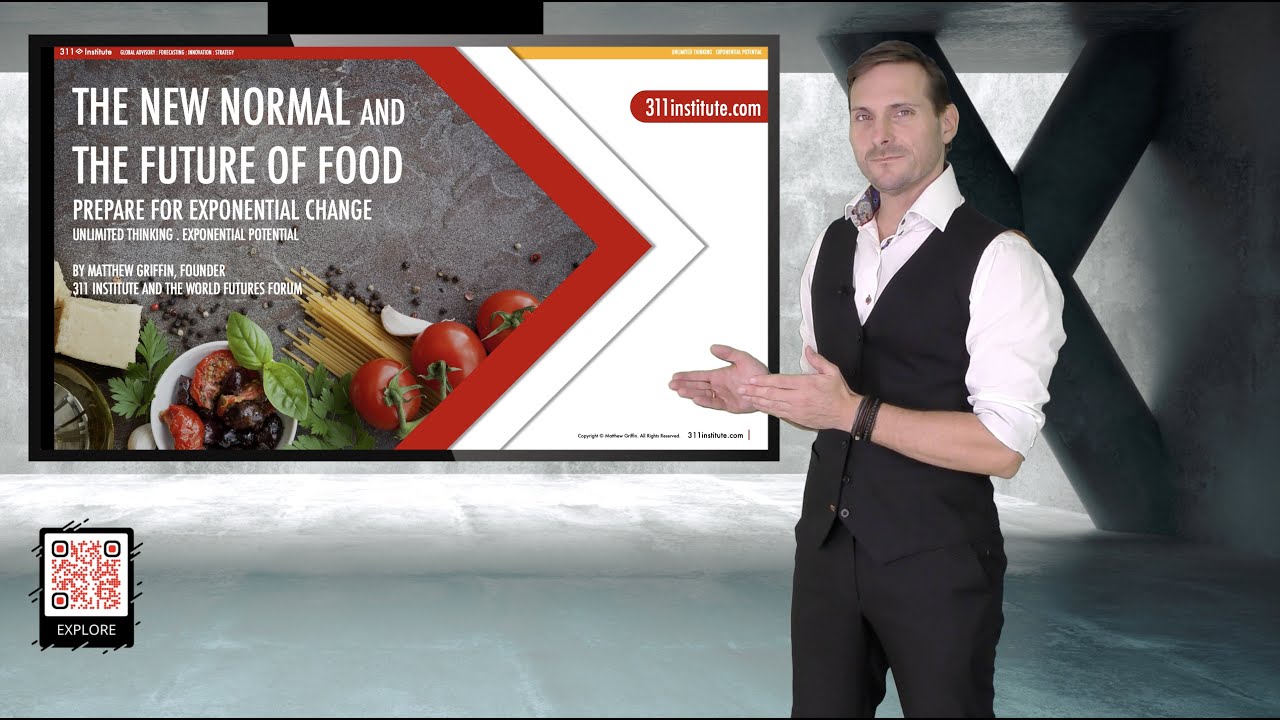
Dwight and the team at Rich's Products asked Matthew to give the keynote at their annual leadership camp. Rich's is a $4 Billion US food manufacturer whose own origin story is one of disruption: in 1945, with dairy products rationed during the Second World War, it disrupted the US dairy industry with the first non-dairy creamers, and did so again in 1960.
Today the food industry is being disrupted once more, not by war but by technology, by the need created by multiple global crises, and by human ingenuity.
"A revolution in how we produce food means that the UN's predictions of future wars over food could be plain wrong."Matthew Griffin, United States, November 2021
Matthew discussed COVID-19's lasting impact on global business, culture and society, and the system level disruptions in how food is produced and distributed. He covered plant based burgers and cellular agriculture, where a cell taken from an animal can be turned into meat in bioreactors, from chicken nuggets to fillet steaks, through to 3D and 4D printing "exotic" fruits.
He closed by showing the technologies available to solve global famine forever and to reduce agriculture's environmental footprint to almost nothing, making it possible to reforest and rewild the Amazon. A revolution in how we produce food, he argued, means the UN's predictions of future wars over food could be plain wrong.
311 Intelligence
What this means for your leadership team
Food has been disrupted before.
Rich's Products grew from a moment when war rationing forced new thinking about dairy. The pressure today comes from technology, global crises and human ingenuity. Leaders should treat disruption as a repeating pattern, not a one-off shock.
Meat may come from cells.
Growing meat from animal cells in bioreactors changes where and how protein is made. 311 tracks cellular agriculture as a trend with wide use expected by 2040. Firms that rely on traditional supply chains should plan for that shift now.
Printing and rewilding change the footprint.
Printed food, from 3D and 4D printing of fruit, points to production closer to the customer. A far smaller farming footprint would also make reforesting and rewilding land such as the Amazon possible. Leaders should link food strategy to land and climate strategy.
Three questions for your next leadership meeting
Which of our products depend on a supply chain that cells could replace?
Who in our firm owns the food technology watch list?
How would a smaller farming footprint change our sourcing risk?
The trends and technologies behind this session
From the 311 Starburst, the 311 Strategic Intelligence Unit’s map of the technologies and trends shaping the next 50 years.
It suggests that the way food is made, moved and sourced is open to change again. Organisations should review where they depend on traditional farming and start testing new production methods early.
How does cellular agriculture relate to this keynote?
It is the idea behind meat grown from a cell in a bioreactor. 311 lists it as a trend to watch, with wide use expected by 2040, so planning should begin well before then.
How does 3D bio-printing relate to this keynote?
The keynote showed printed "exotic" fruits, and 3D bio-printing uses living cells as its ink. 311 places wide use around 2036, which makes it a technology to watch closely.
How can 311 brief our leadership team on this?
Through a private executive briefing or leadership workshop, tailored to your sector, in person first.
Bring this to your leadership teamA private executive briefing or leadership workshop, tailored to your sector. In person first, anywhere in the world.
Analysis by the 311 Strategic Intelligence Unit, from Matthew Griffin’s session and 311 data.
If Matthew gave this session today
Emerging technologies are transforming global industry.
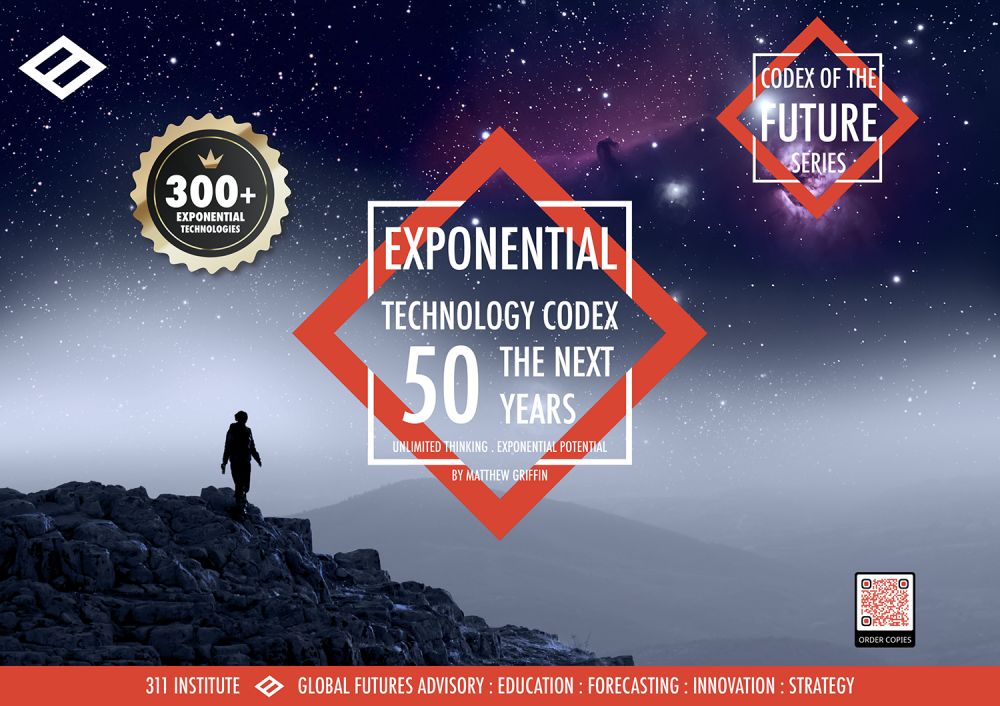
The codex explores hundreds of emerging technologies and their implications for global culture, industry and society, including the kinds of food technology Matthew showed Rich's leaders.