Featured inBloombergThe Wall Street JournalThe Telegraph
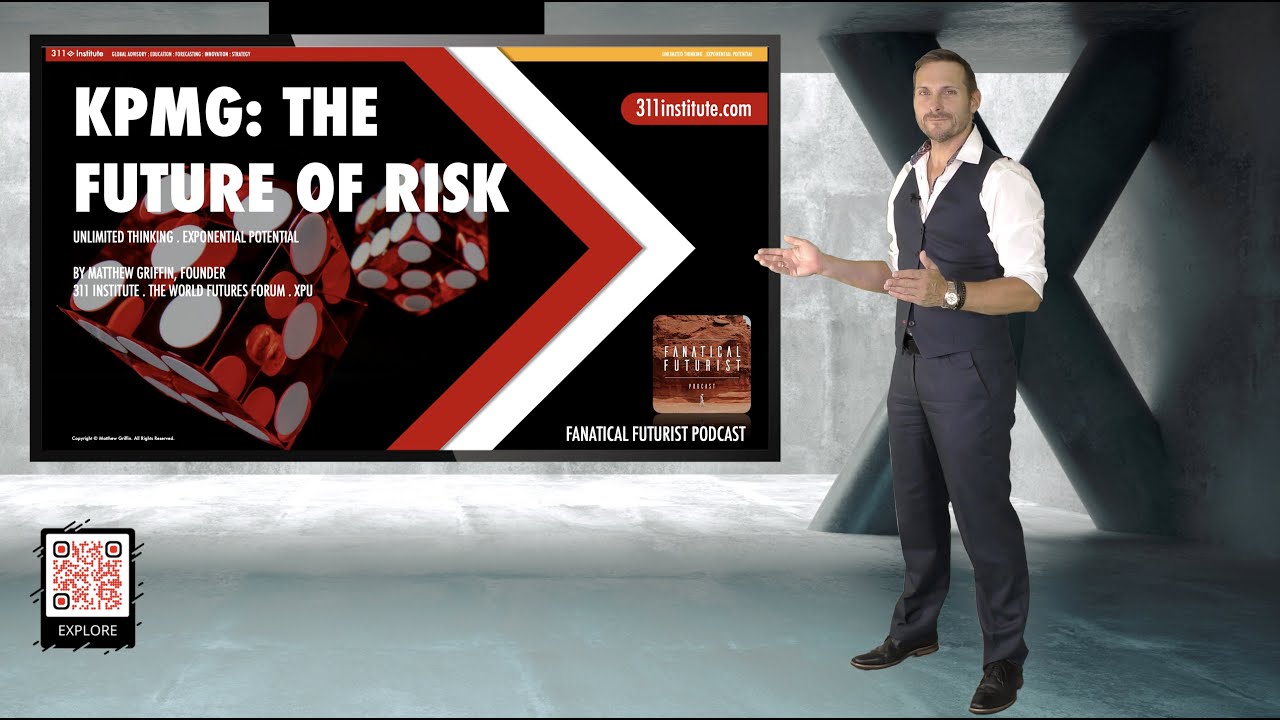
Caroline Rivett at KPMG UK, one of the world's Big Four, invited Matthew to open the annual European Leadership Summit of its risk teams and share his insights on the Future of Risk, especially technology and emerging technology risk.
With no shortage of risks to talk about, the session had two aims. The first was to help KPMG and its managing partners open new client doors and differentiate their risk conversations. The second was to expose the audience to a whole world of new risks and risk categories they had not seen, or in some cases even thought of, before. It was a short session, but it covered a lot of ground before Q&A.
"Phy-Cyber risk is an entirely new category of risk, the convergence of biology and cyber, and it has already been used to hack police forensics labs and hospitals."Matthew Griffin, United Kingdom, November 2022
Some of the risks were naturally cyber related. Matthew also introduced Phy-Cyber risk, a sci-fi like new category formed by the convergence of biology and cyber, which has already been used to hack police forensics labs and hospitals.
The discussion then turned to procurement and supply chain risk, and to the need for organisations to prioritise resilience while staying agile and flexible. He closed on the role scenario planning can play in uncovering and solving emerging risks, alongside political and environmental risk.
311 Intelligence
What this means for your leadership team
Add new categories to the risk register.
Phy-Cyber risk shows threats can come from where biology and cyber meet. Registers built on old categories will miss them.
Balance resilience with agility.
Matthew urged organisations to prioritise supply chain resilience while staying flexible enough to adapt.
Use scenarios to find what you cannot see.
Scenario planning helps uncover emerging risks before they show up in the data.
Three questions for your next leadership meeting
Which risks are missing from our register because they fit no category?
How exposed are our labs, systems and suppliers to attacks that mix biology and cyber?
When did we last test our strategy against new scenarios?
The trends and technologies behind this session
From the 311 Starburst, the 311 Strategic Intelligence Unit’s map of the technologies and trends shaping the next 50 years.
Matthew highlighted emerging technology risks such as Phy-Cyber risk, alongside supply chain, political and environmental risk.
What is cyber-biosecurity?
It protects labs and living things from computer attacks. The 311 Starburst expects wide use around 2037.
Why does the cyber skills gap matter for risk?
The 311 Starburst tracks cyber security teams lacking the right skills, especially in AI and cloud, and rates the trend Act now.
How can 311 brief our leadership team on this?
Through a private executive briefing or leadership workshop, tailored to your sector, in person first.
Bring this to your leadership teamA private executive briefing or leadership workshop, tailored to your sector. In person first, anywhere in the world.
Analysis by the 311 Strategic Intelligence Unit, from Matthew Griffin’s session and 311 data.
If Matthew gave this session today
The dangers of a world where risk becomes systemic.
The codex explores the dangers of a world where global risk becomes systemic, the backdrop to the new risk categories Matthew put in front of KPMG's risk leaders.