Featured inBloombergThe Wall Street JournalThe Telegraph
Helene and Goran at NetNordic, one of Europe's fastest growing system integrators with 650 staff in 17 branches and revenues of over $200 million, invited Matthew to keynote this year's NetNordic summit in Stockholm. In front of a packed auditorium he set out the latest cyber crime and organised crime statistics, explored emerging threats, and closed with an audience Q and A.
Serious organised crime, and it is an industry, has been growing at double digit rates for some time and shows no sign of slowing. In 2022 there were over 5.5 billion malware attacks and close to 500 million ransomware attacks, and attacks on organisations and individuals rose by 125%, before the cost of attacking people falls to zero and before tools that democratise the creation of cyber exploits become widely available.
"The serious organised crime industry, and it is an industry, has been growing at a double digit growth rate for a while now, and it shows no signs of slowing."Matthew Griffin, Stockholm, December 2023
With organised crime revenues estimated at over $6 trillion, about $1.2 trillion of it cyber related, and an estimated impact of over $8 trillion on the global economy, security is now a top of mind issue. Attackers are growing bolder and more sophisticated, and defenders have their work cut out.
The emerging threats he covered included biometric spoofing, the cloning of people's biometric data, including their voices, to extort money and exfiltrate data, cookie stealing that bypasses 2FA and MFA, the importance of zero trust and perimeterless security, and how the latest AIs are being both weaponised and hacked using human psychology.
311 Intelligence
What this means for your leadership team
Crime is now a growth industry.
Organised crime has grown at double digit rates for some time and shows no sign of slowing. Attacks on organisations and individuals rose by 125% in 2022, and the cost of attacking people is heading towards zero. Leaders should plan for more attacks, not fewer.
Old checks no longer hold.
Cloned voices and faces can fool biometric checks, and stolen cookies can bypass 2FA and MFA. A single login or a trusted network is no longer enough. Security has to check every user and device every time.
Defence must assume a breach.
Ransomware remains a live threat, and the latest systems are being both weaponised and hacked through human psychology. Teams should expect attackers to get in and focus on spotting them early. People and process matter as much as tools.
Three questions for your next leadership meeting
Which of our logins would still work if a cookie were stolen?
Could a cloned voice trick our staff into moving money?
How quickly would we spot an attacker already inside?
The trends and technologies behind this session
From the 311 Starburst, the 311 Strategic Intelligence Unit’s map of the technologies and trends shaping the next 50 years.
Cyber crime is organised, growing and getting cheaper to carry out. Organisations should assume more frequent and more convincing attacks, and move away from trust based on a single network or login.
How does zero trust relate to the threats Matthew described?
Matthew stressed zero trust and perimeterless security. Zero trust replaces trusted networks with checks on every user and device every time, which limits the damage when a cookie is stolen or a login is bypassed.
How does biometric spoofing relate to this session?
Matthew covered the cloning of biometric data, including voices, to extort money and exfiltrate data. Biometric spoofing is the trend where criminals fool face, voice and fingerprint checks, so biometrics alone should not be the only gate.
How does ransomware fit with the figures he gave?
The session cited close to 500 million ransomware attacks in 2022. Ransomware is the trend where gangs encrypt and steal data to extort organisations, so it belongs in any plan built around those numbers.
How can 311 brief our leadership team on this?
Through a private executive briefing or leadership workshop, tailored to your sector, in person first.
Bring this to your leadership teamA private executive briefing or leadership workshop, tailored to your sector. In person first, anywhere in the world.
Analysis by the 311 Strategic Intelligence Unit, from Matthew Griffin’s session and 311 data.
If Matthew gave this session today
How organised crime groups grow despite government pressure.
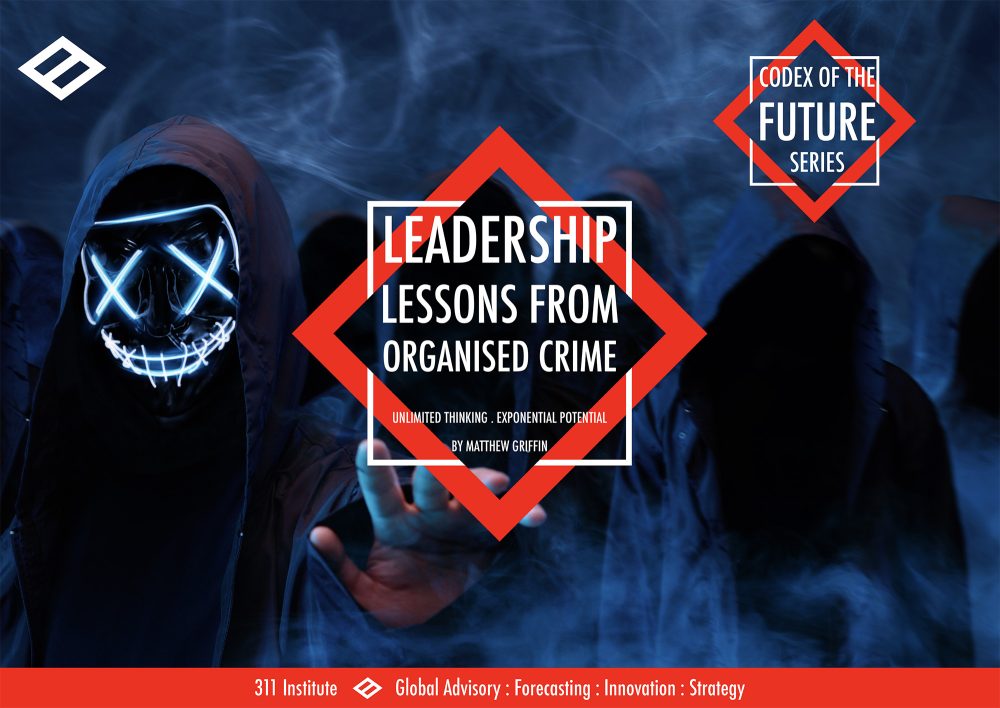
Leadership Lessons from Organised Crime examines the techniques organised crime groups use to grow despite huge competitive pressure from governments, the same industry whose growth Matthew laid out for NetNordic's audience.