The way we work and the way we tap into skills is changing, and tat impacts everything from how we educate our children and train our workforce, to how we build and operate companies.
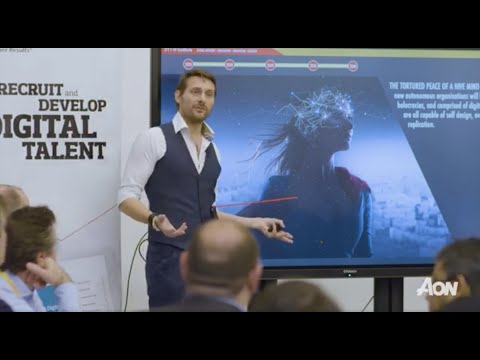
Firstly, it was a great honour to be asked by Peter and Aon’s Managing Director Mike Burke to present to Aon’s senior leadership team in London earlier this year, before Covid-19 hit, and discuss the Future of Work and Skills 2040 and their impact on the world’s future workforce, workplace, and work, and the trends and skills we’ll all need to be aware of and embrace if we aren’t all to be upended by the coming of the so called Forth Industrial Revolution, where increasingly capable and sophisticated exponential technologies will threaten to automate both blue and white collar workers with more voracity than at any point in human history.
But just as these new innovations and technologies threaten many jobs they also bring with them a huge amount of opportunity for those who can see them coming and have enough foresight to navigate them, because, just as Google democratised access to information, Artificial Intelligence (AI) will help democratise access to expertise and skills, and plenty of that was on show during the presentation.
See the workshop in full
In the next twenty years we will see more technological progress than we’ve seen in the last 20,000 years with much of it hard to get our heads around, and as more and more science fiction like technologies, from biological computers and holograms to light sabers become science fact, and as elsewhere other technologies enable the development of everything from autonomous companies and robo-workers to creative machines, that create and innovate new products, and digital humans, companies and individuals are going to have to be more adaptable and flexible than ever before.
Will my job exist in 10 years?
Fortunately for society though humanity isn’t short of foresight and skills, and with the right societal education and support systems in place we’ll be able to adapt to this new world of work before it outpaces us, and that’s what I discussed during the speech so I hope you enjoy it and it gives you food for thought when considering your own futures.
The session warns that exponential technologies will threaten blue and white collar roles alike. A leadership team cannot treat automation as a factory issue or an office issue. It needs a view across the whole workforce.
Expertise becomes easier to reach.
Artificial Intelligence will help democratise access to expertise and skills. That lowers the barrier for staff who can use it well. It also raises the pressure on any firm that relies on scarce knowledge.
Adaptability becomes the core skill.
Creative machines, digital humans, robo-workers and autonomous companies all point to the same need. Companies and individuals must be more adaptable and flexible than ever. Education and support systems decide whether people keep pace.
Three questions for your next leadership meeting
Which of our roles are most exposed to automation?
Where could wider access to expertise help our people most?
What support will help staff adapt before change outpaces them?
The trends and technologies behind this session
From the 311 Starburst, the 311 Strategic Intelligence Unit’s map of the technologies and trends shaping the next 50 years.
What does the Future of Work and Skills 2040 session mean for organisations?
It means planning for a workforce that technology will reshape across both office and factory roles. Organisations that build foresight and adaptability early are better placed to use the opportunity.
How does Job Automation relate to this session?
The session says exponential technologies threaten to automate blue and white collar workers. 311 tracks Job Automation as an Act now trend, with employers automating tasks across office and factory jobs.
How does Artificial Intelligence relate to this session?
The keynote says Artificial Intelligence will democratise access to expertise and skills. 311 tracks it as an Act now trend, spreading through work, research and daily life and reshaping jobs, power and policy.
How can 311 brief our leadership team on this?
Through a private executive briefing or leadership workshop, tailored to your sector, in person first.
Bring this to your leadership teamA private executive briefing or leadership workshop, tailored to your sector. In person first, anywhere in the world.
Analysis by the 311 Strategic Intelligence Unit, from Matthew Griffin’s session and 311 data.
If Matthew gave this session today
One heavy AI user directs about 18 people's work.
311 Institute's Future of Work report finds a heavy AI user already directs the work of about 18 people for $180 a month. It takes the productivity question this session raised and measures what one person can now make and direct.

 Interested in the Exponential Future? Connect, download a free E-Book, watch a keynote, or browse my blog.