Future of society sessions forSlovakiaTechSamsungCalifornia Governor's OfficeThe Mentor ProjectBritish Property FederationRWE
Featured inBloombergThe Wall Street JournalThe Telegraph
About this podcast
Firstly, thank you to ITSP and the Mentor Project for asking me to participate in their weekly podcast series where we discussed the future of almost everything, from the future of food and transportation, to the future of democracy and society itself. And with so many things changing the only difficulty we had discussing it was trying to fit it all in, which is why we have more podcasts in the pipeline.
Listen to the show!
With the global rate of change continuing to accelerate exponentially, as we see more people connected to a greater variety of increasingly digital products and services, and the rise of not tens but hundreds of status quo busting exponential technologies, we truly live in an era where the only thing that is changing is everything.
Join us on this adventure as we look at what technology already exists, what is good and bad about it, and why policies and politics will be what will make our future either a utopian or a dystopian one. We better all have a say on that...
You can listen to the podcast below and don’t forget to like and subscribe!
The session describes a rate of change that keeps accelerating as more people use more digital products and services. Faster adoption and shorter corporate lifespans compress planning cycles. A yearly strategy review may be too slow.
Technology is a crowd, not a trend.
The source points to hundreds of exponential technologies, not tens. Exponentially improving technologies keep reshaping the economy even as classic chip scaling slows. Leaders should track many fronts at once and not bet on one.
Politics shapes the outcome.
The session argues that policies and politics decide whether the future is utopian or dystopian. Rapid swings in tariffs, rules and subsidies already make policy a top source of business uncertainty. Autocracies now govern about three quarters of the world's people, so the rules your firm faces will differ widely by market.
Three questions for your next leadership meeting
Which of our plans assume the pace of change stays where it is?
Where could a sudden policy shift hurt our business most?
Who in our team tracks many technologies, not just one?
The trends and technologies behind this session
From the 311 Starburst, the 311 Strategic Intelligence Unit’s map of the technologies and trends shaping the next 50 years.
It says change is speeding up, technologies are multiplying and politics will decide how the future turns out. Organisations should shorten their planning cycles, watch many technologies at once and treat policy as a core risk.
How does the Exponential Technologies trend relate to the session?
The session says hundreds of exponential technologies are challenging the status quo. This trend shows such technologies keep reshaping the economy even as classic chip scaling slows, so the pressure on business models continues.
How does the Accelerating Rate of Change trend relate to the session?
The session says the rate of change keeps accelerating as more people connect to digital products and services. This trend shows faster adoption and shorter corporate lifespans squeezing business planning cycles.
How can 311 brief our leadership team on this?
Through a private executive briefing or leadership workshop, tailored to your sector, in person first.
Bring this to your leadership teamA private executive briefing or leadership workshop, tailored to your sector. In person first, anywhere in the world.
Analysis by the 311 Strategic Intelligence Unit, from Matthew Griffin’s session and 311 data.
If Matthew gave this session today
Hundreds of emerging technologies, mapped for industry.
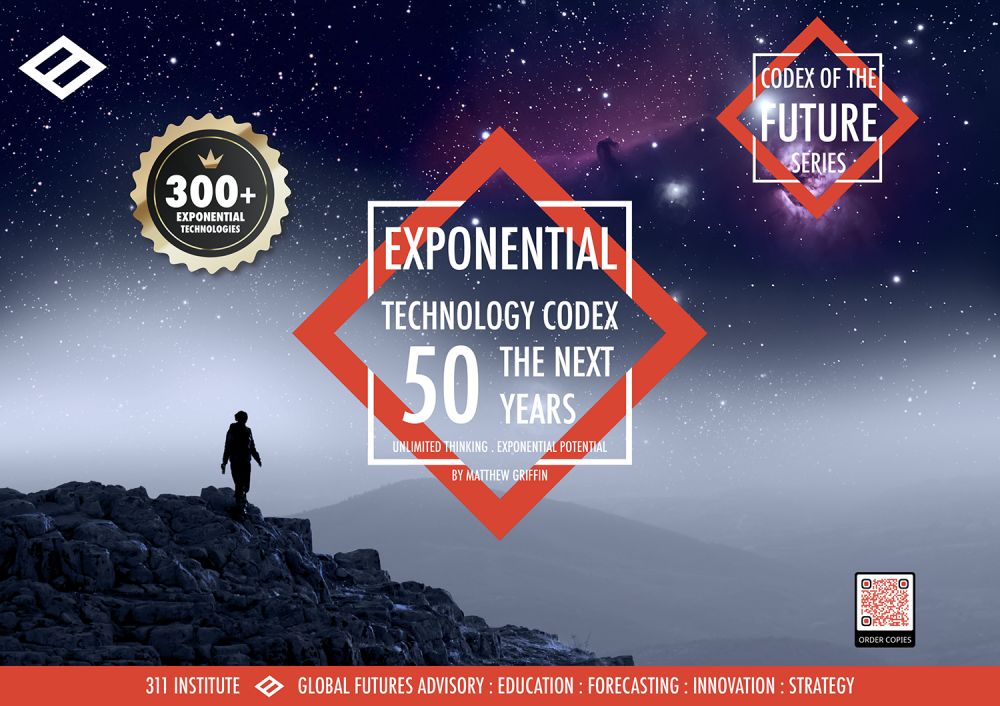
The codex explores hundreds of emerging technologies and their implications for global culture, industry and society, the long-range view that any 2080 infrastructure strategy depends on.