Adidas unveil world’s first fully recyclable sneakers that last you a lifetime
Advances in new materials, production techniques and company processes mean we increasingly have a way to eliminate many forms of needless waste.

Key takeaways
- Developed by BASF and Adidas, TPU can be transformed into different shapes and textures just by changing the way the material is processed, largely by manipulating heat.
- In the place of adhesives, Adidas is simply using heat to bind various sections of the shoe together.
- The rest of the recycled material will get put to use in making other Loop products.
Cite or link to this article
Griffin, M. (2019) 'Adidas unveil world’s first fully recyclable sneakers that last you a lifetime', 311 Institute, 18 August. Available at: https://www.311institute.com/adidas-unveil-worlds-first-fully-recyclable-sneakers-that-last-you-a-lifetime/ (Accessed: 8 October 2026).
As much as we all love trainers one of the biggest problems many people have with them is that when they wear out they’re dead. Gone forever into the world of landfill, only to be seen again in millions of years’ time when future humans are digging around looking for fossil relics of our society. Now though all that might be a thing of the past after Adidas unveiled their “100 percent recyclable Loop sneaker” that, once everything is refined, such as their business model, recycling and returns processes, means that one day those shoes could literally last you a lifetime.
Made by Adidas’ FutureCraft division, who’ve been innovating everything from mass market 3D printed sneakers that are made on demand only when you buy them from one of their on demand pop up shops, through to sneakers made from waste ocean plastic, and more, the Loop got its name because instead of being part of a dead end pattern that sees millions of sneakers get thrown away every year Adidas has created a 100 percent recyclable sneaker, that can be, worn, processed, shredded, and then reborn again as a brand new shoe, over and over again. With some caveats, for now.
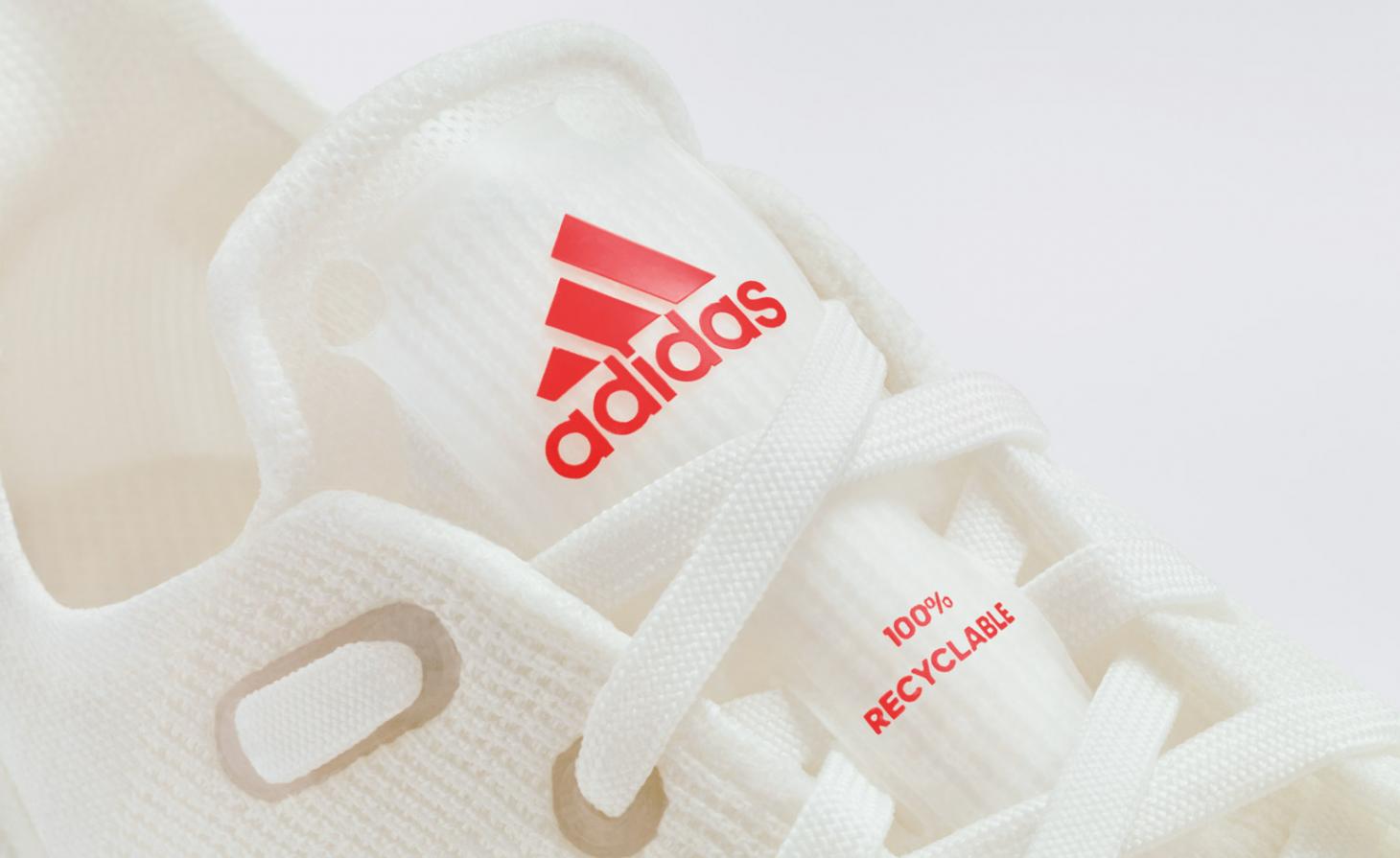
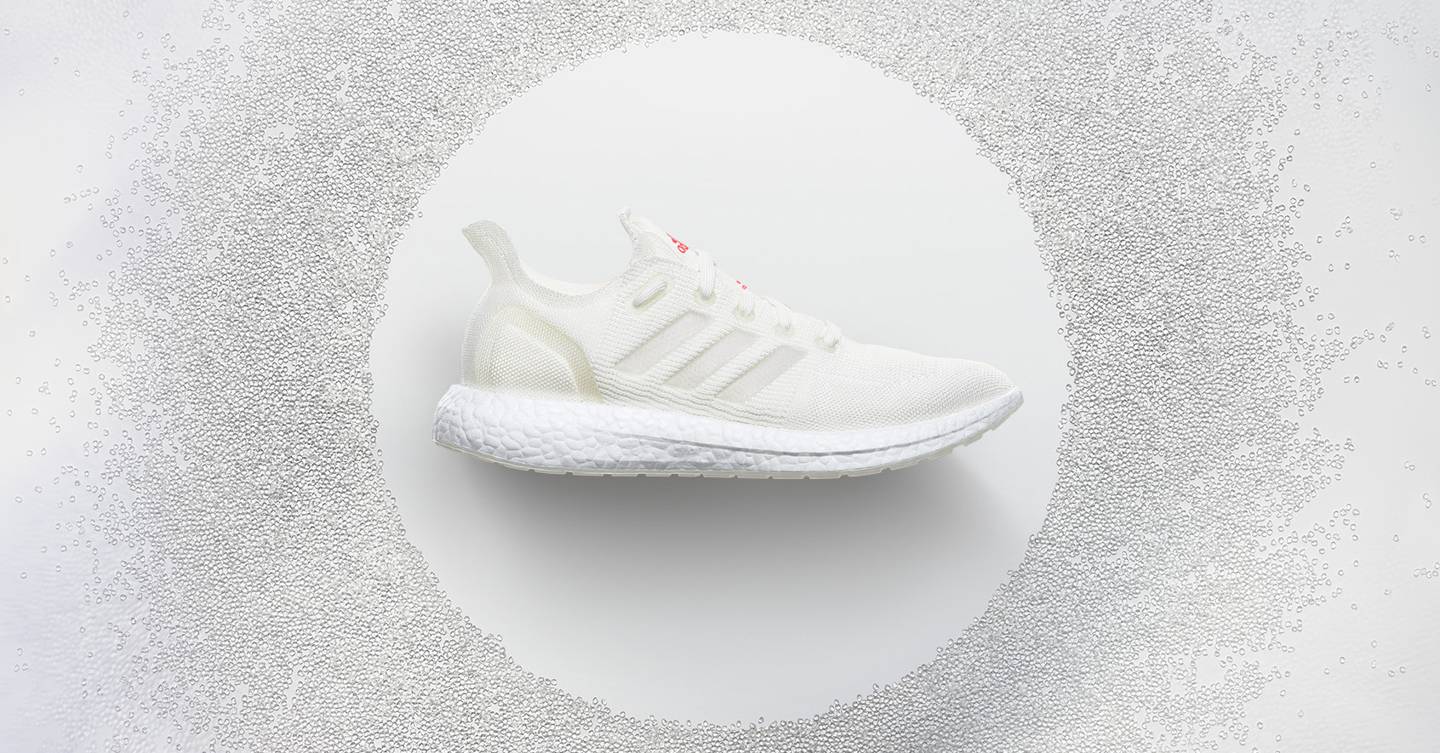


This isn’t the first time Adidas has shown off its interest in making fully recyclable shoes, but where FutureCraft really moves the idea forwards is in the development of a single material that can be used to make the entire show, everything from the upper, midsole, laces, and even the rigid torsion bar on the bottom are all variations of the same basic material, Thermoplastic Polyurethane (TPU).
Developed by BASF and Adidas, TPU can be transformed into different shapes and textures just by changing the way the material is processed, largely by manipulating heat.
Furthermore, no glues or adhesives are used to construct the shoe which means less waste that makes it easier to break down the shoe when it’s time to get to the dirty work of recycling. In the place of adhesives, Adidas is simply using heat to bind various sections of the shoe together.
Another important thing to note about Adidas’ grand plan, is that unlike other recyclable products that get down-cycled and turned into plastic bottles or used to make children’s playground, the Loop is intended to be up-cycled, meaning materials from the Loop will be reused to make future pairs of shoes and not other products.
Also, for anyone worried about a Zion Williamson-style blowout while exercising, FutureCraft senior director Graham Williamson told me that while the Loop is designed to be more sustainable and environmentally friendly than a traditional shoe, it’s also a piece of high-quality workout gear. That’s why FutureCraft chose to make the Loop a running shoe in the first place, the team knew that once it could create single-material running shoe that could match the performance of its traditional sneakers, more casual shoe styles would be a cinch to make. And those will inevitably come next.
In addition to the Loop’s innovative manufacturing method, Adidas also wants to incentivise owners to take part in its recycling process with a cash reward, and while the company’s still working out the specifics it’s planning on refunding between $10 and $20 or possibly more to owners for dropping their shoes off at a nearby store or sending them back in to be recycled. And, conveniently, in order to help remind people when it’s time to recycle them owners will even be able to register their shoe in an app using the QR code painted on the shoe’s tongue.
However, all of this optimism and innovation comes with a big caveat. That’s because while the first generation Loops are 100 percent recyclable right now Adidas’ recycling process is only able to reuse 5 to 10 percent of that original material for use in crafting second generation Loops. The rest of the recycled material will get put to use in making other Loop products.
That’s not exactly what everyone might have in mind when they see the “100% recyclable” tag featured on the laces of the first-gen Loops. But I guess you have to start somewhere, and even being able to reuse the TPU in first gen Loops to make components such as the outsole, eyelets, and tongue label seems like a promising beginning. And at least Adidas are trying.
Furthermore, Williamson claims that Adidas already has more recent Loop prototypes with elements of the shoe featuring as much as 50 percent recyclable content, and if Adidas can increase the amount of recyclable material used in future generations, it may be possible for Adidas to hit or get close to its target around when the Loop officially launches sometime in the second half of 2020.
So, what’s going to happen to the Loop between now and 2020? Well, in addition to ironing out its recycling pipeline, registration process, and reward structure for the Loop, Adidas will also be seeding 200 pairs of shoes to lucky owners who will then become the first testers in Adidas recyclable shoe project. Testers will be asked to wear the shoe for roughly six months before returning them so they can be shredded, processed, and potentially turned into a brand new pair.
There are also a number of significant challenges Adidas will need to overcome before it’s achieved the Loop’s recycling goals, although overall, it seems like a move in the right direction. And with TPU being the material used to create the signature Boost sole found in so many of Adidas’ sneakers, if Adidas can nail recycling shoes with the Loop, it could have a major effect on the environmental impact of hundreds or thousands of shoes in the future, at which point one pair of shoes could literally last you a lifetime.
What this means for your organisation
Design for the end of life.
Adidas built the Loop from one material, TPU, with no glues. Heat joins the parts. That makes the shoe easier to break down and recycle. TPU is rated TRL 9 in 311 data and is marked Act now, so the material is ready to use today.
Recycled claims need honest limits.
The first Loops are 100 percent recyclable, but the process can only reuse 5 to 10 percent of the material in second generation shoes. Prototypes reach 50 percent. Infinitely recyclable plastics sit at TRL 6 with wide use expected by 2032. Plan for the gap between what is recyclable and what is recycled.
Returns are part of the product.
Adidas plans a refund of between $10 and $20 or more for returned shoes, plus a QR code that links to an app. It will test with 200 pairs worn for roughly six months. Recycled content rules are also heading towards law, with 311 data pointing to around 2030. Firms that build a return route now will be ready.
Three questions for your next leadership meeting
- Could our main product be made from one material with no adhesives?
- What share of our recyclable material do we actually reuse today?
- Would a cash refund and a simple app bring our products back?
The trends and technologies behind this story
From the 311 Starburst, the 311 Strategic Intelligence Unit’s map of the technologies and trends shaping the next 50 years.
Analysis by the 311 Strategic Intelligence Unit, from Matthew Griffin’s article and 311 data. First published on Fanatical Futurist.
FAQ
Why does this matter?
Advances in new materials, production techniques and company processes mean we increasingly have a way to eliminate many forms of needless waste.

About the author
Matthew Griffin Founder, 311 Institute
Matthew Griffin is a multi-award winning Futurist and expert in Disruption and Innovation, Geopolitics, Leadership, and Technology, who NASA have described as a "walking encyclopaedia of the future" and a "futurist Polymath."
Read full bio
Matthew Griffin is a multi-award winning Futurist and expert in Disruption and Innovation, Geopolitics, Leadership, and Technology, who NASA have described as a "walking encyclopaedia of the future" and a "futurist Polymath." 17-time best selling author of the "Codex of the Future" series, Matthew is the Founder and Futurist in Chief of the 311 Institute, a global Futures and Deep Futures advisory firm working with royal households, world leaders, G7, G20, and G77 governments, NGOs, and multi-national mid and mega cap firms to help them explore, shape, and lead the next 50 years of business and society.
An award-winning YouTube creator with over a million followers, with an unrivalled global reach and impact, Matthew is a highly sought-after international keynote speaker, lecturer, and mentor who collaborates with global leaders through the United Nations Alliance of Civilizations (UNAOC) and United Nations General Assembly (UNGA) to shape pivotal initiatives such as the UN’s AI for Humanity program, the United Nations Conference of the Parties (UN COP), and the World Economic Forum in Davos.
As the former Global Head of Cloud, National Security, and Enterprise Sales for companies including Atos, Dell-EMC, and IBM, Matthew has a proven track record of building multi-billion dollar business units and turning failing divisions into market leaders. His ability to identify, analyse, and communicate the implications of hundreds of emerging technologies and trends is unparalleled, and his insights are trusted by many of the world’s most respected organisations, including ABB, Accenture, Adidas, AON, ARM, BCG, Centrica, Citi, Coca-Cola, Dentons, Deloitte, Dow Jones, EY, Google, KPMG, Lego, Legal & General, LinkedIn, Microsoft, PepsiCo, Qualcomm, RWE, Samsung, Siemens AG and Siemens Energy, T-Mobile, UBS, VISA, Walmart, Workday, Worldpay and many others.
Regularly featured in the global media including the AP, BBC, Bloomberg, CNBC, Discovery, Forbes, Khaleej Times, Telegraph, TIME, ViacomCBS, WIRED, and the WSJ, Matthews mission is to help organisations create a fair and sustainable future whose benefits are shared by everyone irrespective of their ability, background, or circumstances.
What future do you need to see?
Choose one to get started on industry and manufacturing and the future of your organisation.
Sources and further reading
- Developed by BASF and Adidas polyurethanes.basf.de
Source: first published by the 311 Institute on 18 August 2019. Cite as: Griffin, M. (2019). Adidas unveil world’s first fully recyclable sneakers that last you a lifetime. 311 Institute. https://www.311institute.com/adidas-unveil-worlds-first-fully-recyclable-sneakers-that-last-you-a-lifetime/
You are welcome to quote this article with credit and a link to the original.