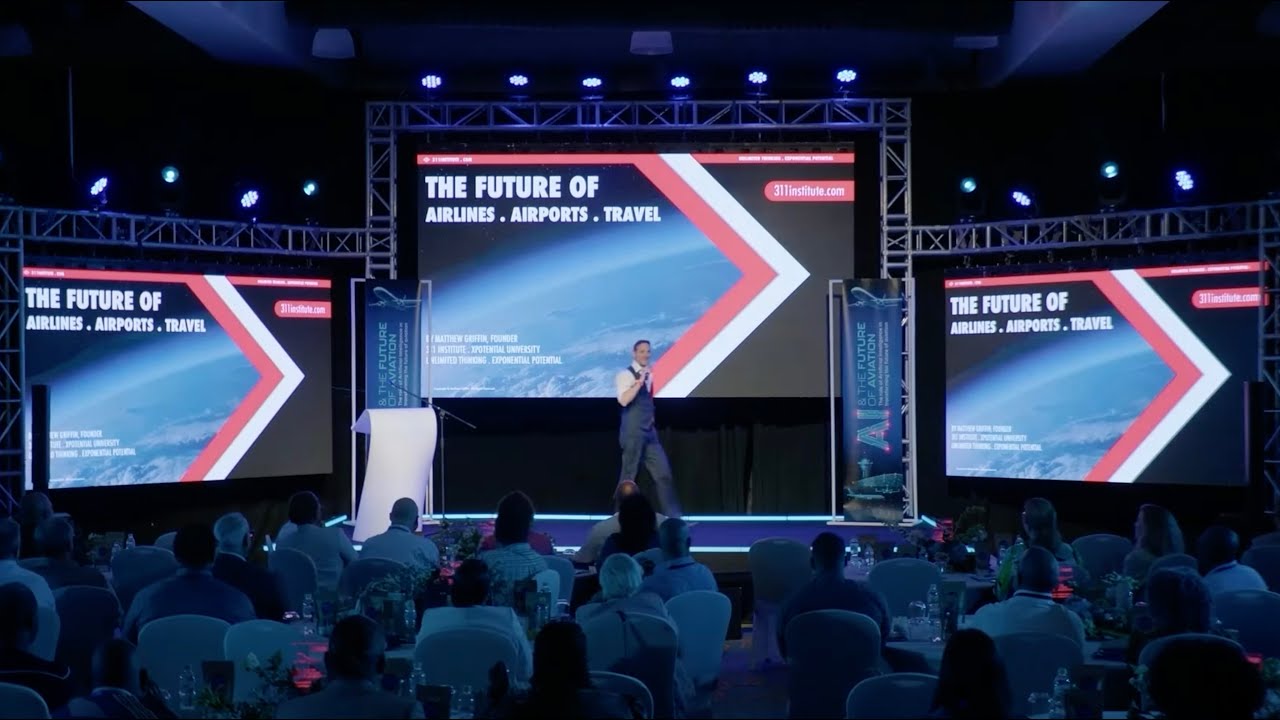
Invited by Crystal and the team at the Dutch Caribbean Air Navigation Service Provider (DC-ANSP) and IATA to open this year's Future of Aviation summit in Curaçao.
Matthew GriffinFounder, President and Futurist, 311 Institute
G7 · G20governments advised
850+keynotes
102countries
17codexes
Mobility and logistics sessions forBuyInAutoalan KeskusliittoSlovakiaTechLondon Borough of HounslowWISTA InternationalCorporate World Intelligence
Featured inBloombergThe Wall Street JournalThe Telegraph
Crystal and the team at the Dutch Caribbean Air Navigation Service Provider (DC-ANSP) and IATA asked Matthew to give the opening keynote at the Future of Aviation summit, held at the Renaissance Wind Creek Curaçao Resort. The invite-only audience of government ministers, leaders and experts from Europe, North America and Latin America met to discuss the future of the airport, aviation and tourism industry from a regional and international perspective.
The industry is still recovering from the deep injuries inflicted by the pandemic, while grappling with an ever-changing geopolitical and technological environment. Matthew looked at what the leading players are doing now, and at what the near and far future holds.
"We're witnessing what I call a Wright Brothers 2.0 moment, with significant new developments in everything from airframes, energy, and propulsion as companies focus on costs, efficiency, ESG, and speed."Matthew Griffin, Curaçao, March 2025
He began with a long view of airports, airport operations, Air Traffic Control (ATC) and Air Traffic Management (ATM), each being reshaped in different ways by the rapid development of different technologies. He then turned to aviation itself, where he sees a Wright Brothers 2.0 moment: significant new developments in airframes, energy and propulsion as companies focus on cost, efficiency, ESG and speed, with speeds ranging from Mach 1 to above Mach 25.
Matthew closed with the future of aviation maintenance and security, border control and the workforce, including the decentralisation of ATC and the technologies the industry already has at its disposal to solve its well-known ATC hiring crisis.
311 Intelligence
What this means for your leadership team
Staffing sets the pace of growth.
The keynote called ATC hiring a well-known crisis, and said the industry already holds technologies to solve it. Our data on the air traffic control crunch says controller shortages and old systems are a hard limit on flight growth. Leaders should treat ATC capacity as a planning constraint now.
Aircraft change faster than systems.
The session described new airframes, energy and propulsion, with speeds from Mach 1 to above Mach 25. Exponential technologies keep reshaping the economy even as classic chip scaling slows. Airports, ATM and border control will need to keep up with the aircraft.
Routes and rivals are moving.
Gulf mega-airports are being built to pull more long-haul connecting traffic away from Europe. High speed rail, led by China's 50,000 km network, adds another option on shorter journeys. Regional leaders should test their route and tourism plans against both.
Three questions for your next leadership meeting
Which of our operations depends most on scarce ATC and technical staff?
What would our airport need to change if new aircraft arrive faster?
Which routes could shift to Gulf hubs or fast rail?
The trends and technologies behind this session
From the 311 Starburst, the 311 Strategic Intelligence Unit’s map of the technologies and trends shaping the next 50 years.
What does this session mean for aviation organisations?
It points to three pressures at once: staffing, faster technical change and shifting demand. The industry is also still recovering from the pandemic. Leaders should plan for all three together.
How does the air traffic control crunch relate to this keynote?
The keynote ended on the ATC hiring crisis and decentralised ATC. Our trend data rates this as Act now, with wide use in 2025. Staffing and ageing systems cap how far flights can grow.
How do Gulf mega hub airports relate to this keynote?
The keynote looked at airports and travel from a regional and international view. Gulf mega-airports aim to draw long-haul connecting traffic away from Europe. We rate this as Explore, with wide use by 2032.
How can 311 brief our leadership team on this?
Through a private executive briefing or leadership workshop, tailored to your sector. We work in person first.
Bring this to your leadership teamA private executive briefing or leadership workshop, tailored to your sector. In person first, anywhere in the world.
Analysis by the 311 Strategic Intelligence Unit, from Matthew Griffin’s session and 311 data.
If Matthew gave this session today
Hundreds of emerging technologies, and what they mean.
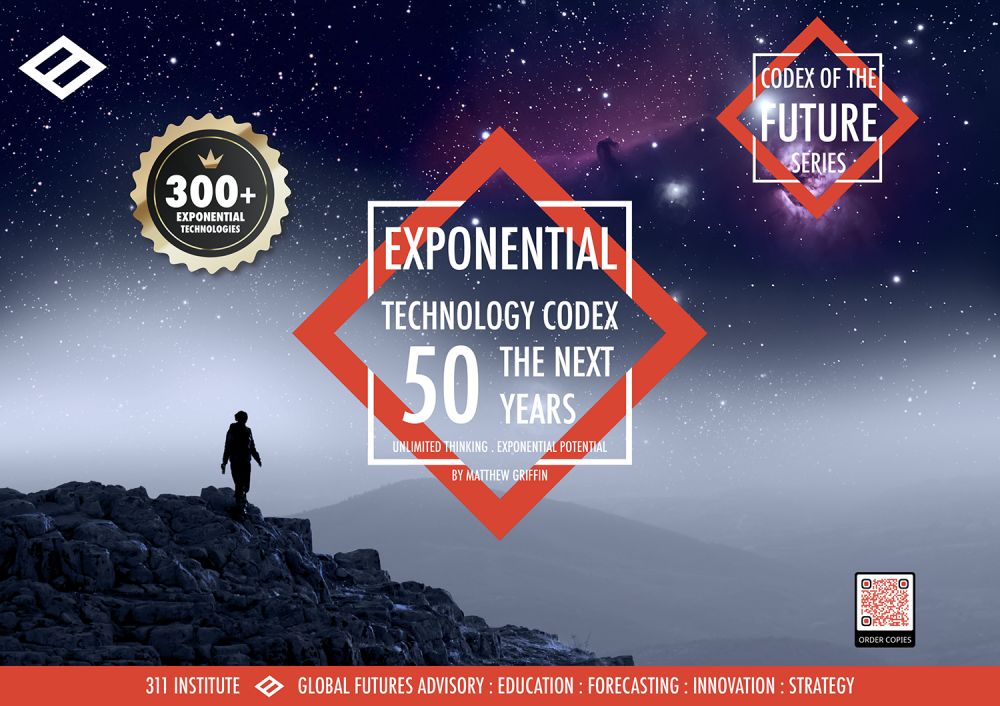
The Future of Exponential Technology Codex explores hundreds of emerging technologies and their implications for global culture, industry and society, the same forces reshaping aviation from airframes to air traffic control.