These tiny bio-electronic implants could treat Rheumatoid Arthritis
Lots of people have rheumatoid arthritis and it's a painful condition to have, but now new bioelectronic implants could eliminate most of that pain.

Key takeaways
- Courtesy: UoW Last year, the results of the first in-human pilot study testing a vagus nerve stimulation device for rheumatoid arthritis were published.
- The world’s first large-scale Phase 3 trial testing this experimental arthritis therapy kicked off this year.
- Set to recruit 250 subjects, spanning 40 sites across the US, the trial will be the first to robustly test whether vagus nerve stimulation can treat this common auto-immune disease.
Cite or link to this article
Griffin, M. (2022) 'These tiny bio-electronic implants could treat Rheumatoid Arthritis', 311 Institute, 2 January. Available at: https://www.311institute.com/these-tiny-bio-electronic-implants-could-treat-rheumatoid-arthritis/ (Accessed: 1 October 2026).
Could the future of Rheumatoid Arthritis treatment be a small bio-electronic implant designed to deliver bursts of electrical stimulation to a key nerve that can regulate the body’s inflammatory reflex? A flurry of research around the world is investigating this compelling idea, with large-scale clinical trials underway testing several kinds of novel implants.
Running from the brainstem down to the abdomen through the neck and chest, the vagus nerve is a large conduit that communicates signals between the brain and the body. Electrically stimulating this nerve using small implants is already approved by the US Food and Drug Administration (FDA) to treat some forms of epilepsy and depression.
Learn more about the Future of Healthcare, by Keynote Matthew Griffin
Plus, a great deal of research has focused on how the vagus nerve mediates communication between the gut and the brain. This has led to the development of small devices designed to suppress a person’s appetite by gently stimulating the vagus nerve, tricking the brain into thinking the gut is full.
More recently, researchers have discovered yet another role of the vagus nerve – communicating to the brain when the body is experiencing inflammation. The research has revealed the vagus nerve can act as a brake for the immune system, sending signals to the spleen slowing down its release of inflammatory molecules.
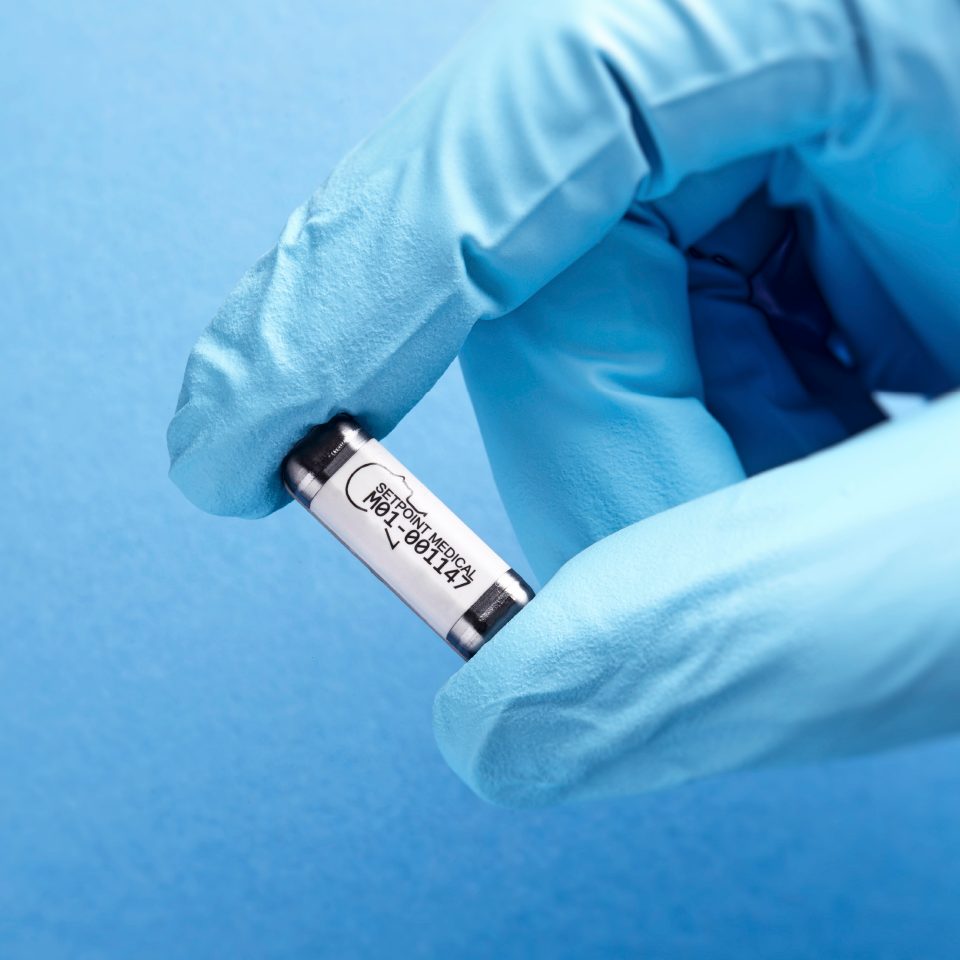
Courtesy: UoW
Last year, the results of the first in-human pilot study testing a vagus nerve stimulation device for rheumatoid arthritis were published. The study was small but the results were promising, with no device-related or treatment-related serious adverse events. And, more importantly, the treatment reduced signs and symptoms of rheumatoid arthritis in the small cohort.
The world’s first large-scale Phase 3 trial testing this experimental arthritis therapy kicked off this year. Set to recruit 250 subjects, spanning 40 sites across the US, the trial will be the first to robustly test whether vagus nerve stimulation can treat this common auto-immune disease.
Andrew Ko, a neurosurgeon from the University of Washington, says the device – which is yet another positive development in the nascent field of bioelectronic medicine that looks to use electricity to heal and treat the body rather than traditional drugs – that’s being tested in the trial is about the size of a vitamin tablet and it's surgically inserted through a small incision in the neck. The implant can be recharged wirelessly by wearing a small collar-like device for an hour each week.
The trial will be blinded and placebo-controlled, with half the cohort randomly assigned to a placebo group that will receive the surgical implant but not be administered any electrical stimulation. And the stimulation being tested will only consist of one minute of activation per day.
“These low voltage stimulations will be administered at night while patients are asleep, so they won’t even notice it,” explains Ko.
The trial is set to last around three years to account for long-term safety and efficacy data. However, the active intervention period will only span 12 weeks. Ko also says if the trial is successful this specific implant will be tested on other autoimmune diseases.
“Rheumatoid arthritis was chosen to study because it is well characterised and there are established ways to track its severity but if this novel approach proves effective, it may work for other autoimmune diseases as well,” explains Ko.
Elsewhere a team in Australia, from the non-profit research organization Bionics Institute, is also working on a vagus nerve stimulation device for rheumatoid arthritis. This device is a little different from the one being trialled in the US.
The Australian device is implanted via keyhole surgery into the stomach, targeting several spots on the vagus nerve in the abdomen. The developers of the device say stimulating this particular part of the nerve allows for more targeted responses in the spleen, avoiding some potential adverse effects on the heart or lungs that may be seen when the vagus nerve is stimulated higher up.
The device is connected to a battery that is implanted around the hip. Robert Klupacs, CEO of the Bionics Institute, says the battery should last around 10 years, meaning the implant is “set and forget” as it needs no weekly charging.
“We’re working towards the day when people with rheumatoid arthritis won’t have to remember to take medication every day and won’t have to cope with side effects,” says Klupacs. “They can ‘set and forget’ about this electrical vagus nerve device, leaving their body to do the work for them.”
The Bionics Institute device was originally developed to treat Crohn’s disease, a type of inflammatory bowel disease, and clinical trials are already underway testing the efficacy of the device in this condition.
Most recently a study published in The Lancet reported a successful proof-of-concept pilot study testing a non-invasive vagus stimulation device for rheumatoid arthritis. This device, worn behind the ear, delivers mild electrical stimulation to the vagus nerve for up to 30 minutes a day.
The majority of the cohort in the pilot study showed clinically significant improvements at the end of the 12-week trial. Almost one quarter of the cohort of 27 achieved disease remission by the end of the study. Future trials with a placebo group will be needed to validate these findings.
It is still early days for the field of study investigating how electrical stimulation of the vagus nerve can influence inflammation and plenty of questions still remain unanswered: What autoimmune diseases could this kind of biostimulation work for? What is the best way to deliver this therapy? Can the vagus nerve be effectively stimulated non-invasively or will a surgical implant ultimately be necessary?
Despite the work ahead, the potential for this novel anti-inflammatory treatment is immense. Evange Romas, a rheumatologist working with the Bionics Institute team in Australia, says it's hard to overstate the potential life-changing effects if this kind of therapy works. With current arthritis treatments often generating harsh side effects – if they even work in the first place – a simple electrical implant regulating inflammation in the body could be a game-changing innovation.
“I have been involved in some great advances in the treatment of rheumatoid arthritis during my career," says Romas. "However, this new treatment is incredibly exciting and I’m doing everything in my power to help the Bionics Institute researchers get it into the clinic for the benefit of my patients as soon as possible.”
FAQ
Why does this matter?
Lots of people have rheumatoid arthritis and it's a painful condition to have, but now new bioelectronic implants could eliminate most of that pain.

About the author
Matthew Griffin Founder, 311 Institute
Matthew Griffin is a multi-award winning Futurist and expert in Disruption and Innovation, Geopolitics, Leadership, and Technology, who NASA have described as a "walking encyclopaedia of the future" and a "futurist Polymath."
Read full bio
Matthew Griffin is a multi-award winning Futurist and expert in Disruption and Innovation, Geopolitics, Leadership, and Technology, who NASA have described as a "walking encyclopaedia of the future" and a "futurist Polymath." 15-time best selling author of the "Codex of the Future" series, Matthew is the Founder and Futurist in Chief of the 311 Institute, a global Futures and Deep Futures advisory firm working with royal households, world leaders, G7, G20, and G77 governments, NGOs, and multi-national mid and mega cap firms to help them explore, shape, and lead the next 50 years of business and society.
An award-winning YouTube creator with over a million followers, with an unrivalled global reach and impact, Matthew is a highly sought-after international keynote speaker, lecturer, and mentor who collaborates with global leaders through the United Nations Alliance of Civilizations (UNAOC) and United Nations General Assembly (UNGA) to shape pivotal initiatives such as the UN’s AI for Humanity program, the United Nations Conference of the Parties (UN COP), and the World Economic Forum in Davos.
As the former Global Head of Cloud, National Security, and Enterprise Sales for companies including Atos, Dell-EMC, and IBM, Matthew has a proven track record of building multi-billion dollar business units and turning failing divisions into market leaders. His ability to identify, analyse, and communicate the implications of hundreds of emerging technologies and trends is unparalleled, and his insights are trusted by many of the world’s most respected organisations, including ABB, Accenture, Adidas, AON, ARM, BCG, Centrica, Citi, Coca-Cola, Dentons, Deloitte, Dow Jones, EY, Google, KPMG, Lego, Legal & General, LinkedIn, Microsoft, PepsiCo, Qualcomm, RWE, Samsung, Siemens AG and Siemens Energy, T-Mobile, UBS, VISA, Walmart, Workday, Worldpay and many others.
Regularly featured in the global media including the AP, BBC, Bloomberg, CNBC, Discovery, Forbes, Khaleej Times, Telegraph, TIME, ViacomCBS, WIRED, and the WSJ, Matthews mission is to help organisations create a fair and sustainable future whose benefits are shared by everyone irrespective of their ability, background, or circumstances.
What future do you need to see?
Choose one to get started on biotech and enhanced humans and the future of your organisation.
Sources and further reading
- some forms of epilepsy and depression mayoclinic.org
- first in-human pilot study thelancet.com
- world’s first large-scale Phase 3 trial clinicaltrials.gov
- Can electroceutical treat rheumatoid arthritis newsroom.uw.edu
- Bionics Institute bionicsinstitute.org
- Melbourne invention brings new hope for rheumatoid arthritis bionicsinstitute.org
- Crohn’s disease mayoclinic.org
- Fulltext thelancet.com
Source: first published by the 311 Institute on 2 January 2022. Cite as: Griffin, M. (2022). These tiny bio-electronic implants could treat Rheumatoid Arthritis. 311 Institute. https://www.311institute.com/these-tiny-bio-electronic-implants-could-treat-rheumatoid-arthritis/
You are welcome to quote this article with credit and a link to the original.