Creative machines
AI that designs, invents and creates.
311 Institute codex
What happens when machines become the creators?
Humans used to be the creators and machines the tools. As a new breed of creative machines emerges, they will become both the creator and the tool, and the implications will be extraordinary.
In short
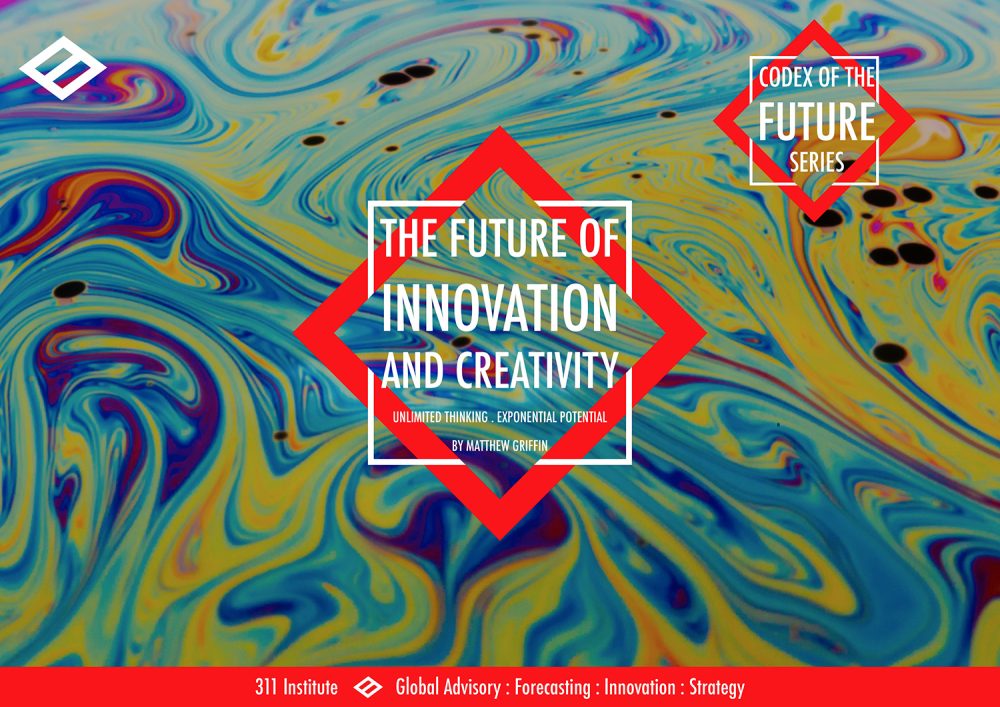
The Future of Innovation and Creativity is a 141-page codex by Matthew Griffin, Founder, President and Futurist of the 311 Institute, that explores what happens when creative machines, not just humans, become a dominant creative force. The third edition, published in January 2022, covers machines that innovate products and content, from synthetic audio, imagery and text to synthetic video, VFX and worlds.
Who it is for: It is for CEOs, innovation, product, R&D, marketing and creative leaders who want to understand how AI will change the way products and content are made.
The creators are changing
Creative machines can already design, innovate and produce new digital content and increasingly sophisticated products, from cars and clothing to computer chips, drugs and software.
This codex, the companion to The Future of Exponential Disruption, explores how creative machines and on-demand manufacturing are rewriting the innovation rule book.
What you will explore
AI that designs, invents and creates.
Technologies that turn ideas into products in real time.
What this means for innovation, business and society.
Key findings
Bring the codex to your organisation
Book a keynote session, executive briefing or workshop session built on The Future of Innovation and Creativity. Or start with a free 15-minute expert call.
Questions and answers
The future of innovation is one where humans and creative machines design, innovate and produce new products and content together, in real time and at global scale. The codex argues that because innovation is a process, it can be broken into steps, turned into algorithms and embedded into machines, helping take concept to market times down to just days.
The codex argues that machines can be creative, and that they arrived far sooner than the 2035 average many experts estimated. It does not argue humans are finished: today's creative machines are more logical and data driven than emotional or empathetic. It expects humans and machines to create both in isolation and in harmony, and calls for leaders to understand the benefits and threats.
Creative machines are AI systems that can design, innovate and produce new digital content and physical and digital products, from cars and clothing to computer chips, drugs and software. To work well they must combine many disciplines, such as context, design thinking, materials science, usability and emotional resonance, which is why building them is so hard.
In the codex, synthetic content means digital content that is synthesised by machines, such as synthetic audio, imagery, text, video and virtual worlds. The codex notes there is still no formal definition of the term. It expects creative machines to generate content non-stop and to democratise content creation for anyone with a smartphone and an internet connection.
The Future of Innovation and Creativity was written by Matthew Griffin, Founder, President and Futurist of the 311 Institute and author of the Codex of the Future series. The third edition was published in January 2022 and runs to 141 pages. It is the companion to The Future of Exponential Disruption codex.
The codex is free to download as a PDF after a short form on this page. The 311 Institute also runs keynote sessions, executive briefings and foresight workshops on the future of innovation and creativity, helping teams explore how creative machines and synthetic content could change their products, services and ways of working.
Keep exploring