Scientists have grown a brain in a jar
Once the stuff of science fiction movies scientists have managed to grow a (small) brain in a jar.

Key takeaways
- Scientists in Singapore have successfully grown functioning midbrain tissue - a feat that may bring researchers a step closer to finding a cure for brain diseases like Parkinson's disease.
- Theoretically, doctors could grow many mini brain replicas from skin cells taken from a Parkinson's patient, allowing specific testing and treatment to be done for the individual, said Professor Ng.
- According to the Singapore Ministry of Health, three in every 1,000 Singaporeans over the age of 50 suffer from Parkinson's disease.
Cite or link to this article
Griffin, M. (2016) 'Scientists have grown a brain in a jar', 311 Institute, 29 July. Available at: https://www.311institute.com/scientists-have-grown-a-brain-in-a-jar/ (Accessed: 1 October 2026).
Scientists in Singapore have successfully grown functioning midbrain tissue - a feat that may bring researchers a step closer to finding a cure for brain diseases like Parkinson's disease.
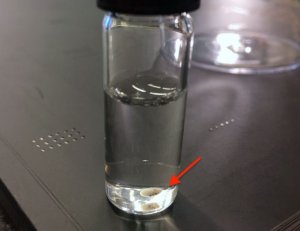
A brain in a jar
The group of researchers from the A*Star Genome Institute of Singapore, the Duke-NUS Medical School and the National Neuroscience Institute announced their findings from their two year research effort to the press on Thursday.
While other researchers have previously managed to grow brain tissue in a lab, the Singapore team says their "eureka moment" came when they found the midbrain tissue had created neuromelanin, a pigment found in the human midbrain.
The midbrain is located in the brain stem, and is the part of the brain responsible for controlling auditory, eye movement and body movement.
The brain of a Parkinson's disease sufferer shows depleted levels of neuromelanin, which has been associated with protecting cells from dying. With the functioning midbrain tissue, the researchers hope it can provide new testing ground for possible cures for the disease.
Professor Ng Huck Hui, the Genome Institute's executive director, said the midbrain tissue had been grown from pluripotent cells - stem cells that can be programmed to become any tissue. The scientists had established a method of turning the cells into midbrain tissue, and noticed the neuromelanin in the "mini brains" that they had grown in their jar.
"We didn't expect to find the black pigment there," he said, adding that the discovery opens the path for more targeted, individual cures.
Theoretically, doctors could grow many mini brain replicas from skin cells taken from a Parkinson's patient, allowing specific testing and treatment to be done for the individual, said Professor Ng.
Each brain organoid is just 2 to 3mm in size, and took just over a month to grow. The tissue's neurons are "live and firing," the team said.
According to the Singapore Ministry of Health, three in every 1,000 Singaporeans over the age of 50 suffer from Parkinson's disease.
FAQ
Why does this matter?
Once the stuff of science fiction movies scientists have managed to grow a (small) brain in a jar.

About the author
Matthew Griffin Founder, 311 Institute
Matthew Griffin is a multi-award winning Futurist and expert in Disruption and Innovation, Geopolitics, Leadership, and Technology, who NASA have described as a "walking encyclopaedia of the future" and a "futurist Polymath."
Read full bio
Matthew Griffin is a multi-award winning Futurist and expert in Disruption and Innovation, Geopolitics, Leadership, and Technology, who NASA have described as a "walking encyclopaedia of the future" and a "futurist Polymath." 15-time best selling author of the "Codex of the Future" series, Matthew is the Founder and Futurist in Chief of the 311 Institute, a global Futures and Deep Futures advisory firm working with royal households, world leaders, G7, G20, and G77 governments, NGOs, and multi-national mid and mega cap firms to help them explore, shape, and lead the next 50 years of business and society.
An award-winning YouTube creator with over a million followers, with an unrivalled global reach and impact, Matthew is a highly sought-after international keynote speaker, lecturer, and mentor who collaborates with global leaders through the United Nations Alliance of Civilizations (UNAOC) and United Nations General Assembly (UNGA) to shape pivotal initiatives such as the UN’s AI for Humanity program, the United Nations Conference of the Parties (UN COP), and the World Economic Forum in Davos.
As the former Global Head of Cloud, National Security, and Enterprise Sales for companies including Atos, Dell-EMC, and IBM, Matthew has a proven track record of building multi-billion dollar business units and turning failing divisions into market leaders. His ability to identify, analyse, and communicate the implications of hundreds of emerging technologies and trends is unparalleled, and his insights are trusted by many of the world’s most respected organisations, including ABB, Accenture, Adidas, AON, ARM, BCG, Centrica, Citi, Coca-Cola, Dentons, Deloitte, Dow Jones, EY, Google, KPMG, Lego, Legal & General, LinkedIn, Microsoft, PepsiCo, Qualcomm, RWE, Samsung, Siemens AG and Siemens Energy, T-Mobile, UBS, VISA, Walmart, Workday, Worldpay and many others.
Regularly featured in the global media including the AP, BBC, Bloomberg, CNBC, Discovery, Forbes, Khaleej Times, Telegraph, TIME, ViacomCBS, WIRED, and the WSJ, Matthews mission is to help organisations create a fair and sustainable future whose benefits are shared by everyone irrespective of their ability, background, or circumstances.
What future do you need to see?
Choose one to get started on biotech and enhanced humans and the future of your organisation.
Sources and further reading
- A*Star Genome Institute a-star.edu.sg
- Duke-NUS Medical School duke-nus.edu.sg
- National Neuroscience Institute nni.com.sg
- grow brain tissue asianscientist.com
Source: first published by the 311 Institute on 29 July 2016. Cite as: Griffin, M. (2016). Scientists have grown a brain in a jar. 311 Institute. https://www.311institute.com/scientists-have-grown-a-brain-in-a-jar/
You are welcome to quote this article with credit and a link to the original.